|
Krygyzstan, is a landlocked country in the eastern regions of Central Asia, lying in the Tian Shan and Pamir mountain ranges. The capital is Bishkek. We visited Karakol, Jeti Ozu Gorge, Cholpon Ata, Chon Kemin & Bishkek in May 2026.
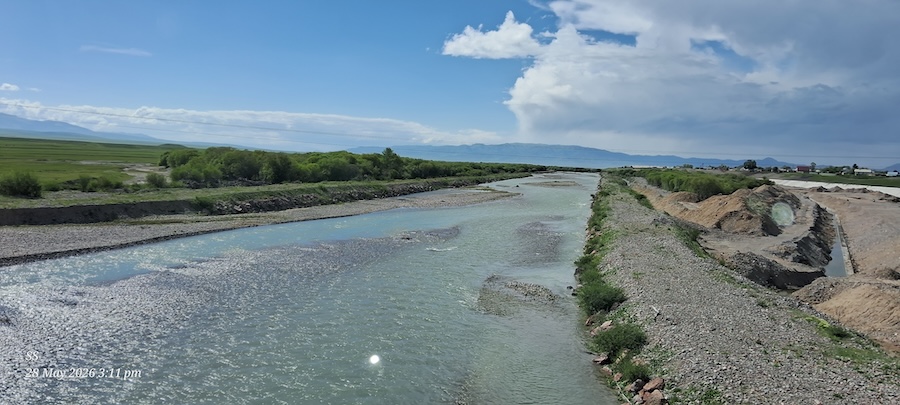
The Chu River (also known as the Shuy River) flowing through the Chu Valley in northern Kyrgyzstan
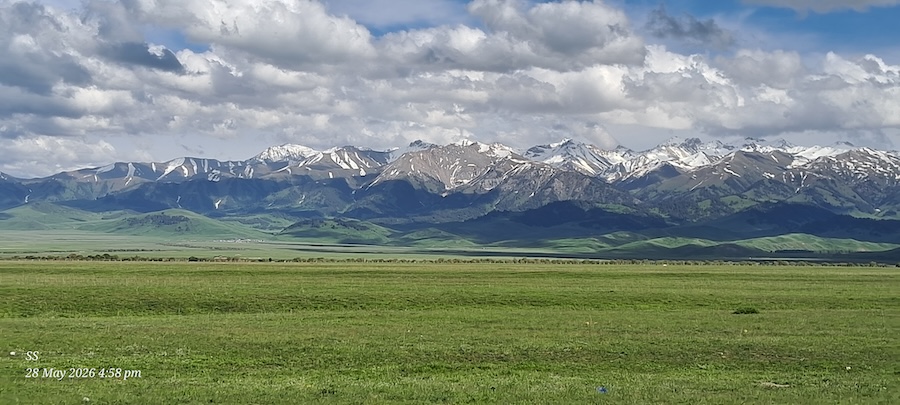
The Tian Shan mountain range.
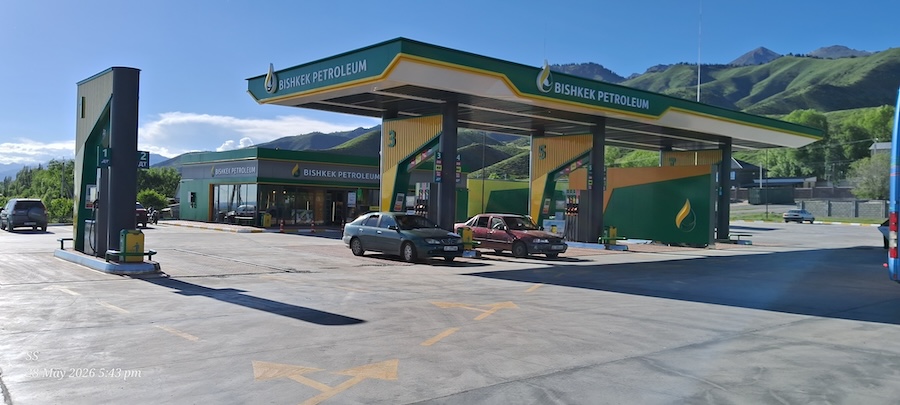
A Bishkek Petroleum gas station situated along major routes toward Lake Issyk-Kul.
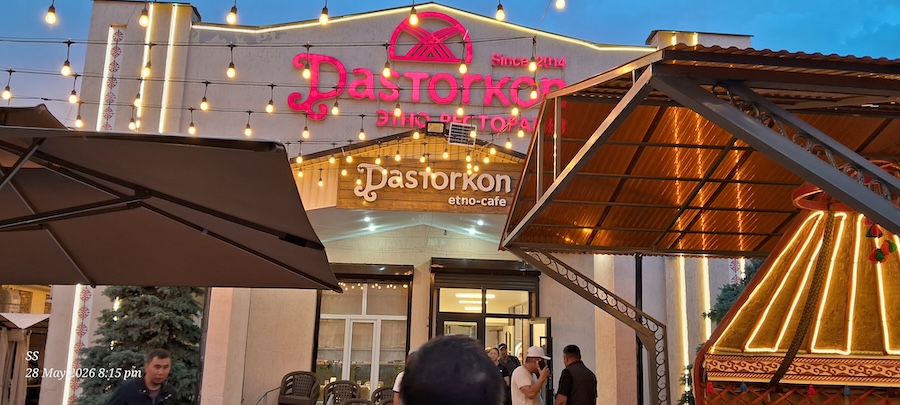
The Dastorkon ethno-restaurant, located in the central part of Karakol. The most popular restaurant in the city, known for its authentic national cuisine, traditional folk music performances, and unique cultural atmosphere.
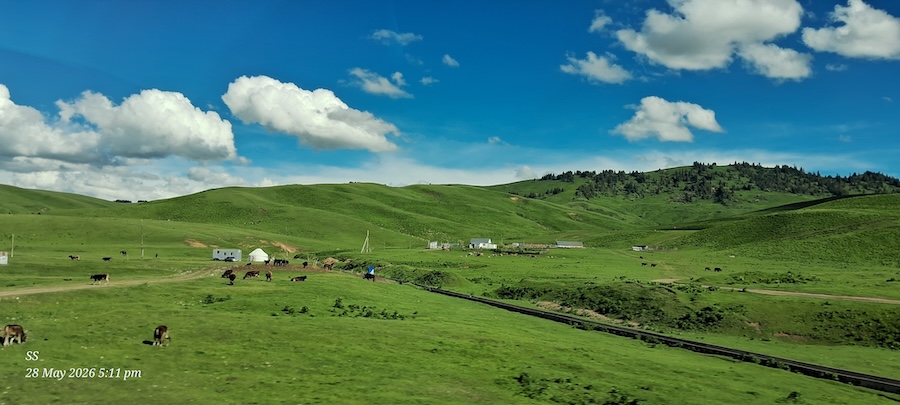
A breathtaking, expansive grassland landscape under a brilliant blue sky dotted with fluffy white clouds.
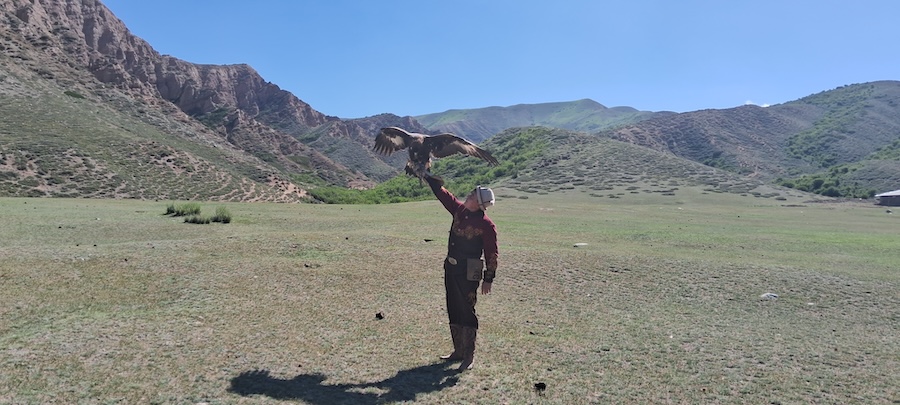
A traditional eagle hunting demostration, a practice passed down through generations, showcasing Krygyzstan's nomadic heritage.
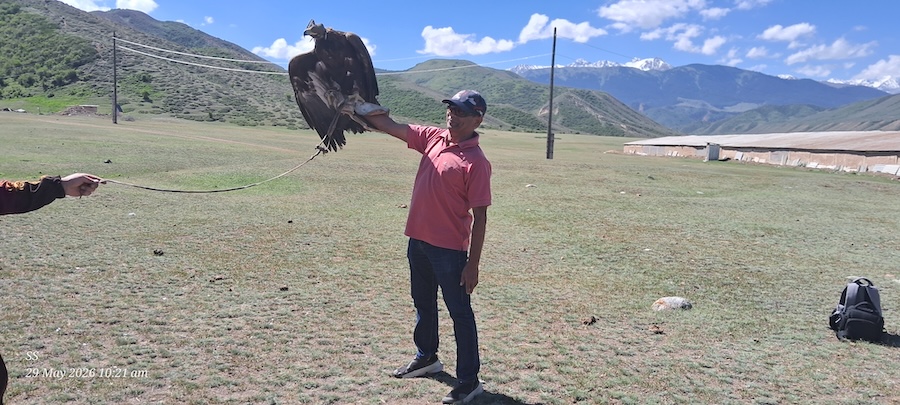
Photo stop, The ancient and breathtaking tradition of eagle hunting.
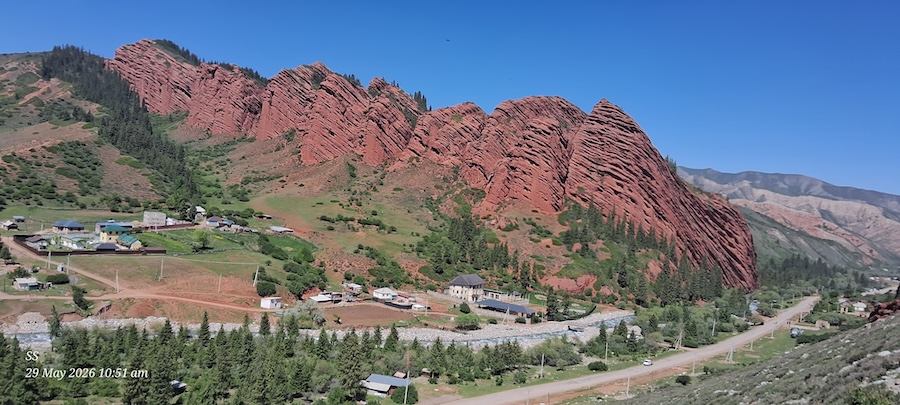
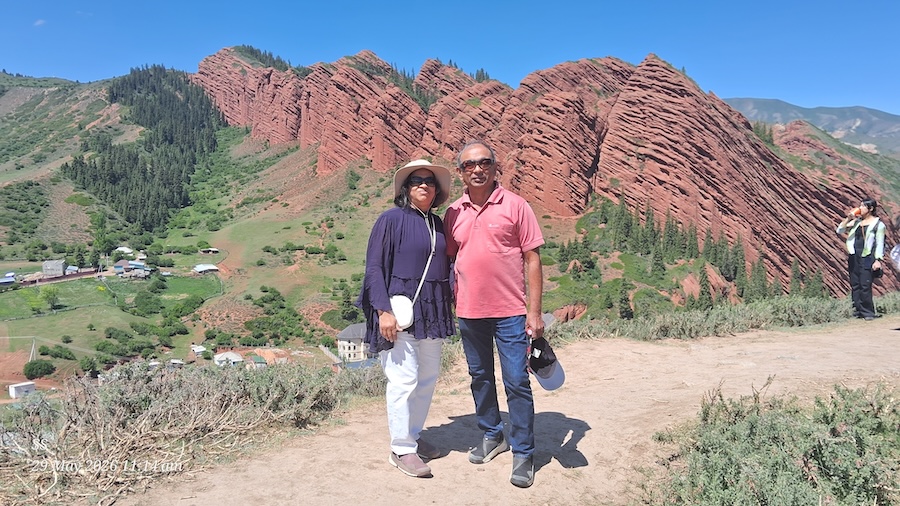
A striking ridge of dark-red sandstone formations carved out by erosion. The name "Jeti-oguz" translates to "Seven Bulls" in the Kyrgyz language, referring to the seven distinct bluffs that look like a row of giant bulls standing in a line.
The breathtaking Jeti-oguz Rocks, a famous natural wonder located in the Jeti-oguz District of the Issyk-Kul Region. Photo stop.
The stunning alpine landscape of the Altyn-Arashan valley.
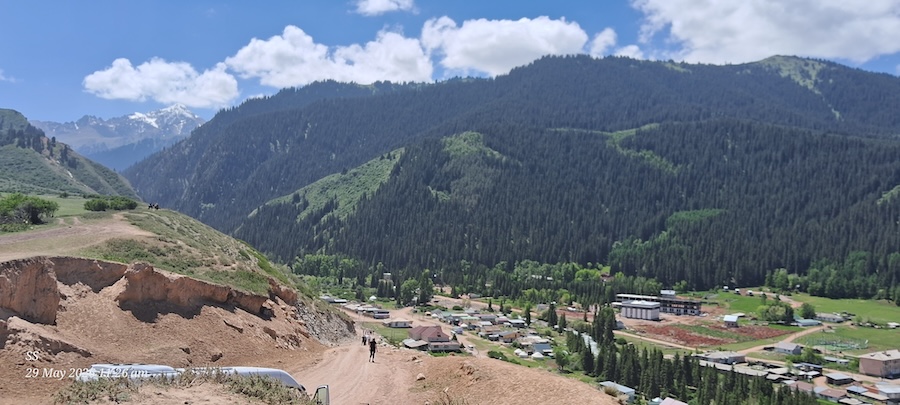
The breathtaking landscape of the Jeti-Oguz Resort Village, nestled deep within a lush valley in the Issyk-Kul Region .
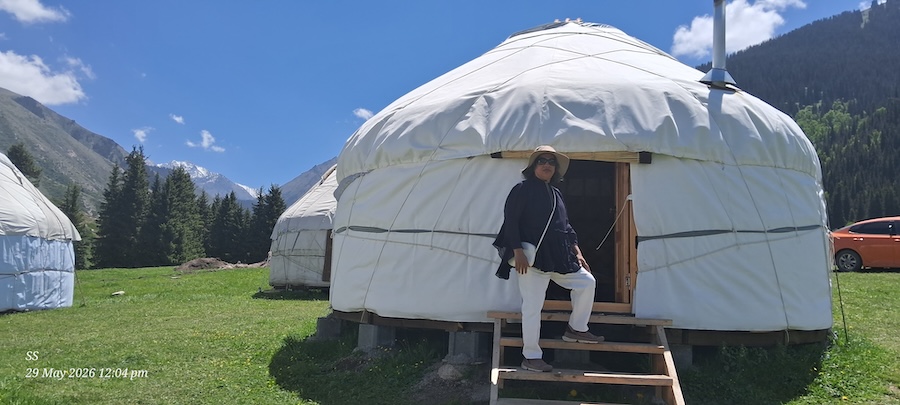
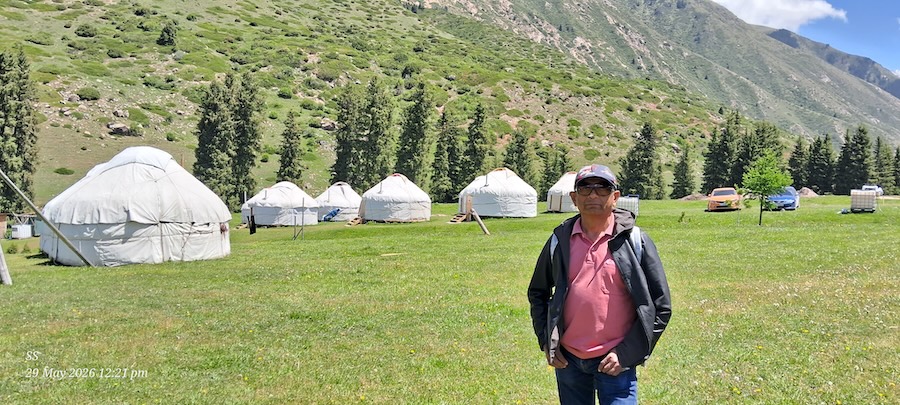
A traditional Kyrgyz yurt.
a traditional nomadic yurt camp, nestled in a lush, green mountain valley
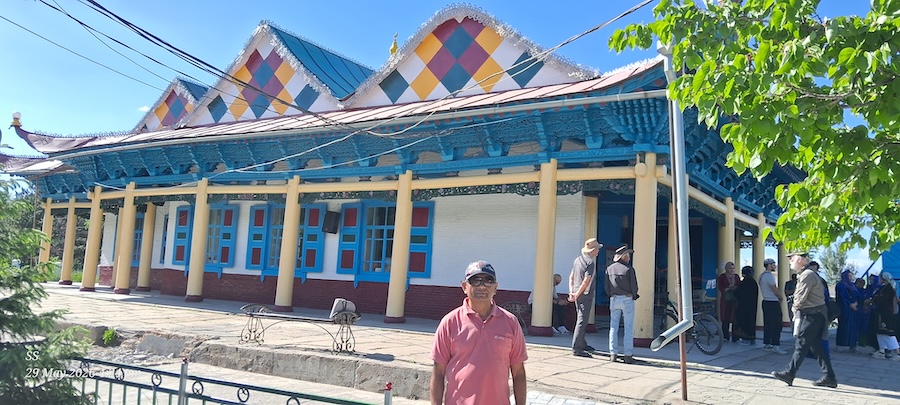
The historic Dungan Mosque, located in the city of Karakol.Built Without Nails: Local craftsmanship constructed the entire wooden building without utilizing a single metal nail. Instead, it relies entirely on a complex system of interlocking wooden joints.
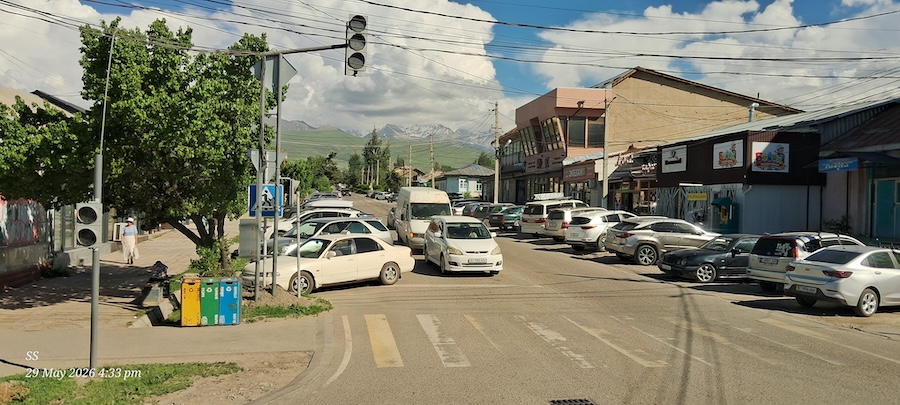
The streets of Karakol
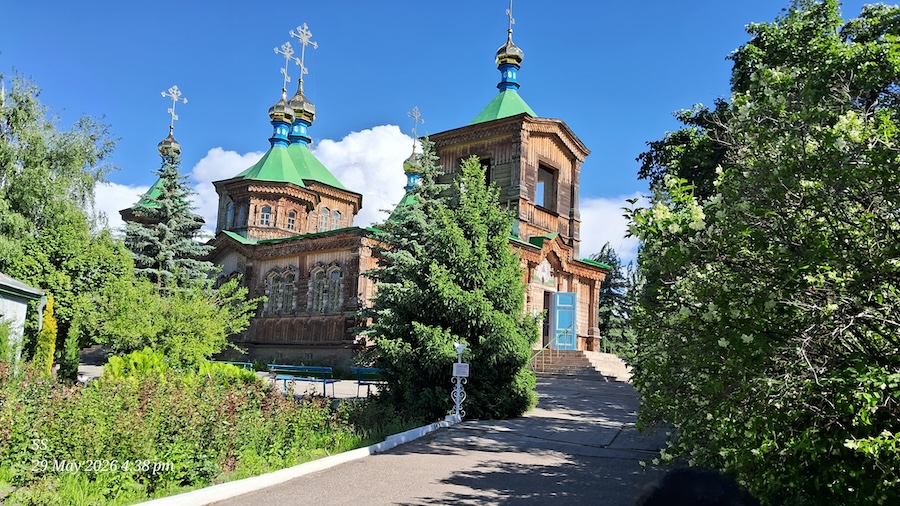
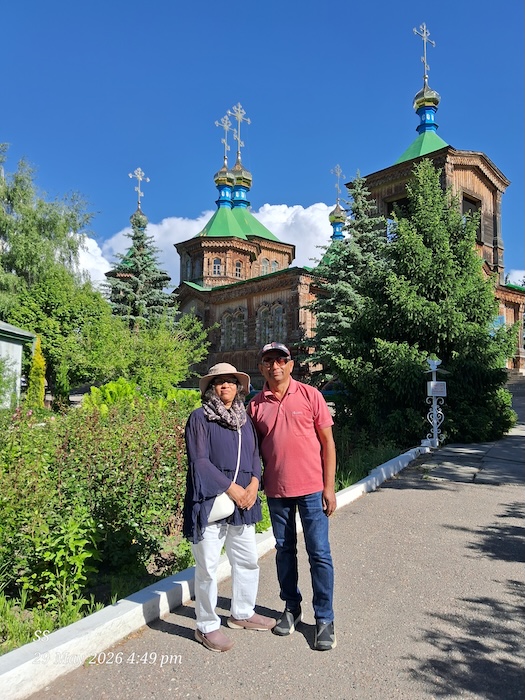
The Holy Trinity Russian Orthodox Cathedral, a famous and historic wooden church located in the city of Karakol. It is a stunning, classic example of 19th-century Russian Orthodox architecture, completely built out of wood without the use of metal nails
For a Photo stop. The Holy Trinity Russian Orthodox Cathedral..
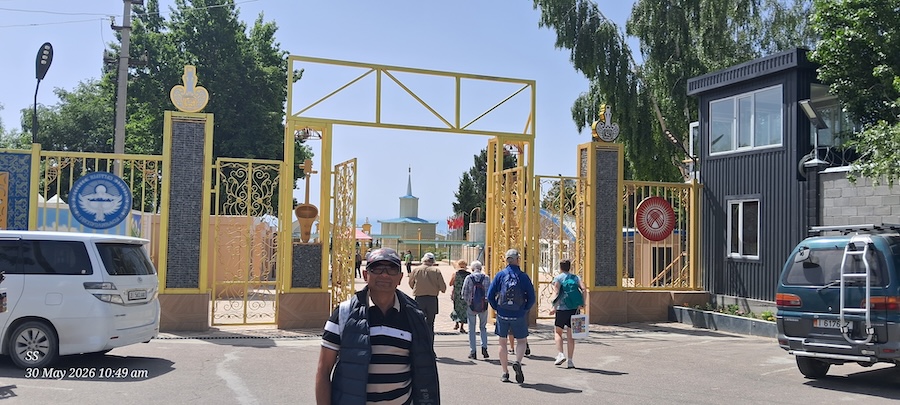
The main entrance gate to the Ruh Ordo Cultural Center (named after the famous Kyrgyz writer Chyngyz Aytmatov). It is located on the northern shore of Lake Issyk-Kul in Cholpon-Ata,.
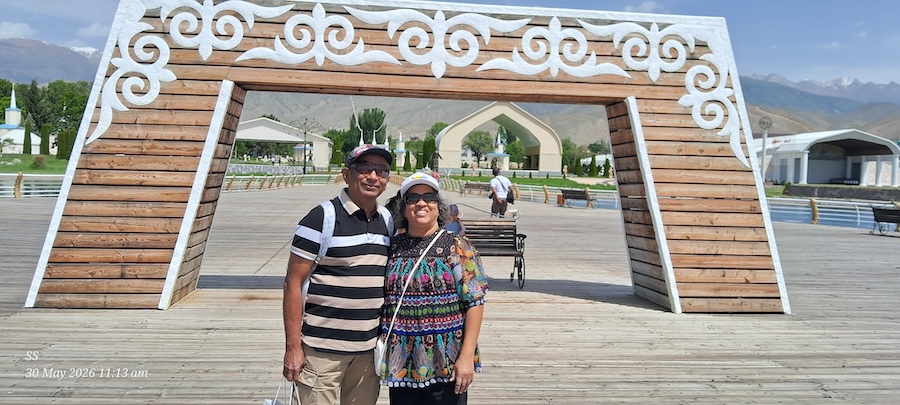
The Ruh Ordo Cultural Center (open-air museum ) at Cholpon-Ata, located right on the northern shore of the scenic Lake Issyk-Kul.
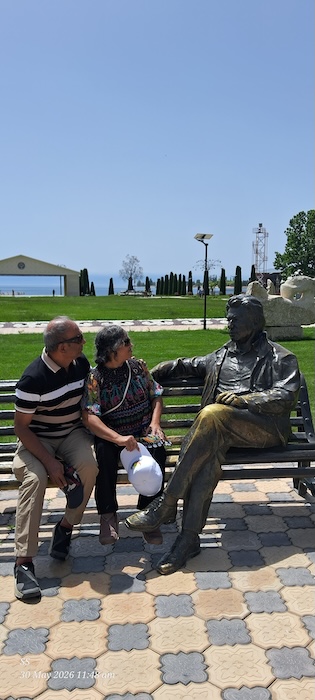
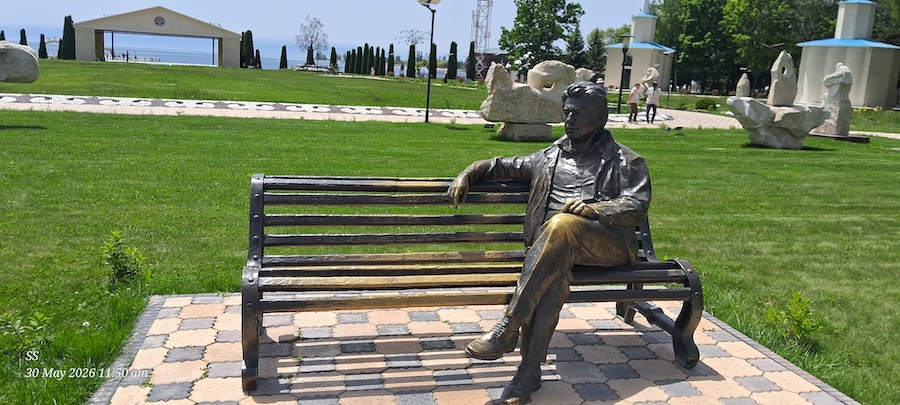
The bronze sculpture of the famous Kyrgyz author Chinghiz Aitmatov seated on a bench at the Rukh Ordo Cultural Center in Cholpon-Ata.
This open-air museum and cultural complex is uniquely dedicated to spiritual tolerance and unity. It houses five identical white chapels representing the world's major religions—Islam, Orthodox Christianity, Catholicism, Judaism, and Buddhism—standing side-by-side to symbolize peace and coexistence
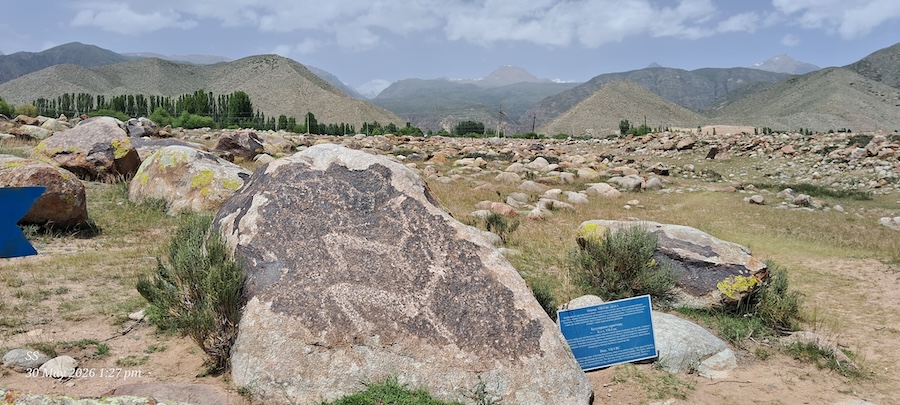
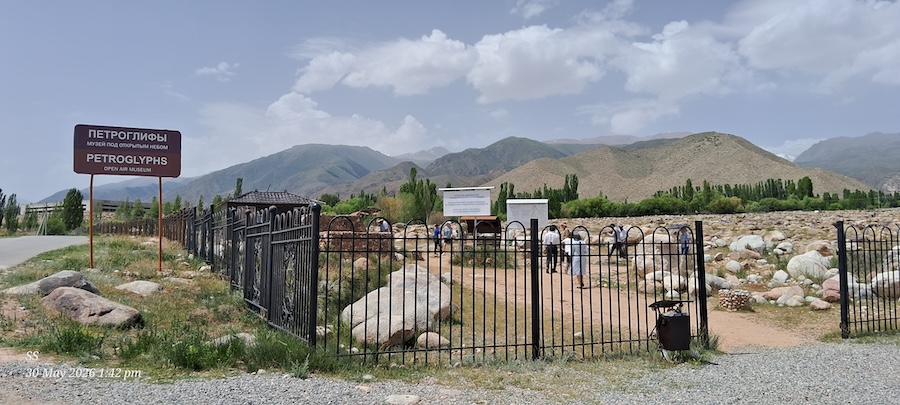
At the Cholpon-Ata Open-Air Museum of Petroglyphs. Boulders across the Museum of Petroglyphs feature snow leopards, deer, wolves, camels, horses, and ancient hunting scenes.
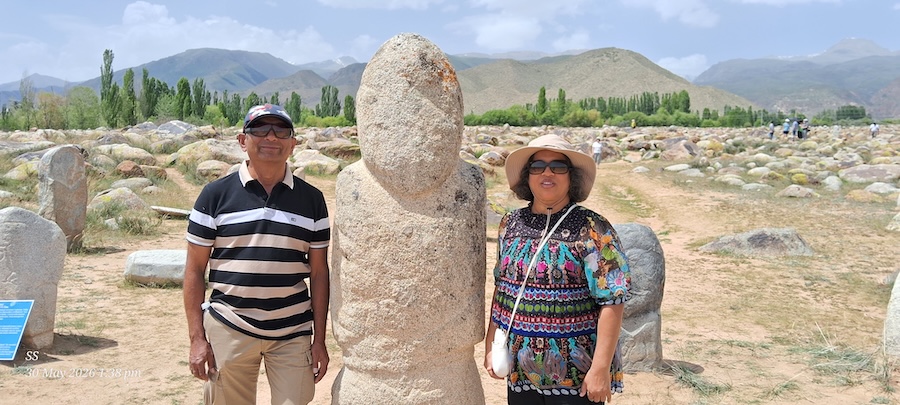
Standing next to a balbal, an ancient Turkic stone monument
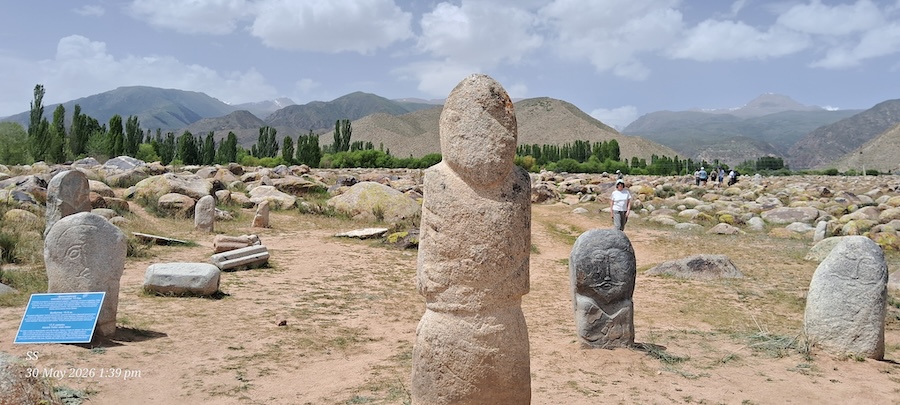
The Balbal, these stone anthropomorphic figures were carved by early nomadic Turkic tribes between the 6th and 10th centuries AD..
The entrance to the Museum of Petroglyphs in Cholpon-Ata, an open-air historical site located in the Issyk-Kul Province of Kyrgyzstan
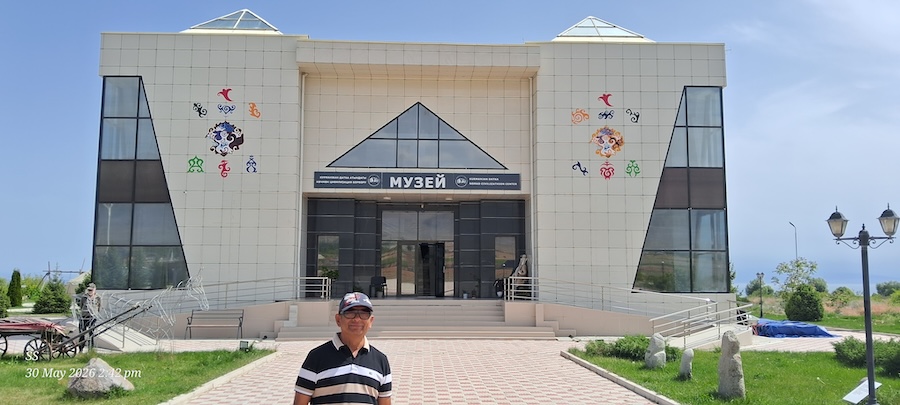
The Kurmanjan Datka Nomad Civilization Center, a modern museum complex dedicated to preserving nomadic history, culture, and heritage.
Hiking in the breathtaking Chong-Kemin Valley, located within the Chon-Kemin National Park in northern Kyrgyzstan
Hiking in the Chon-Kemin National Park.
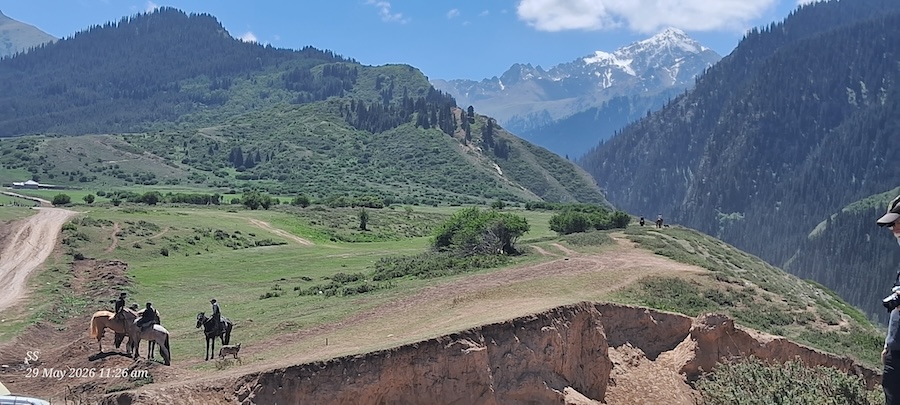
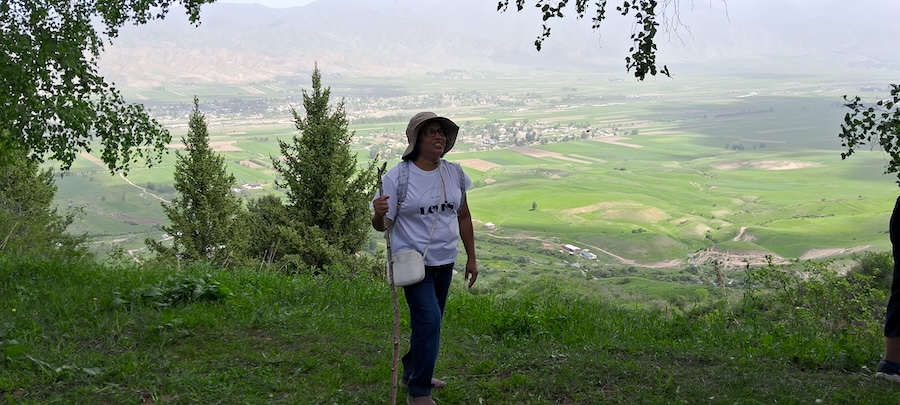
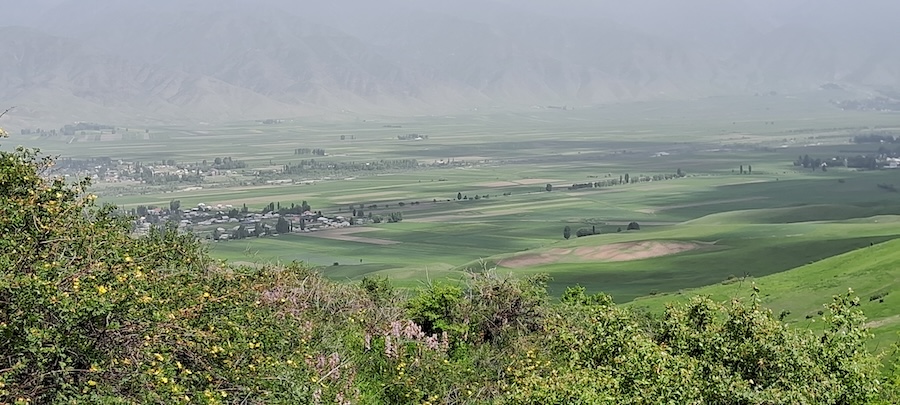
The panoramic view of the Chon-Kemin Valley, located within the Chon-Kemin National Park.
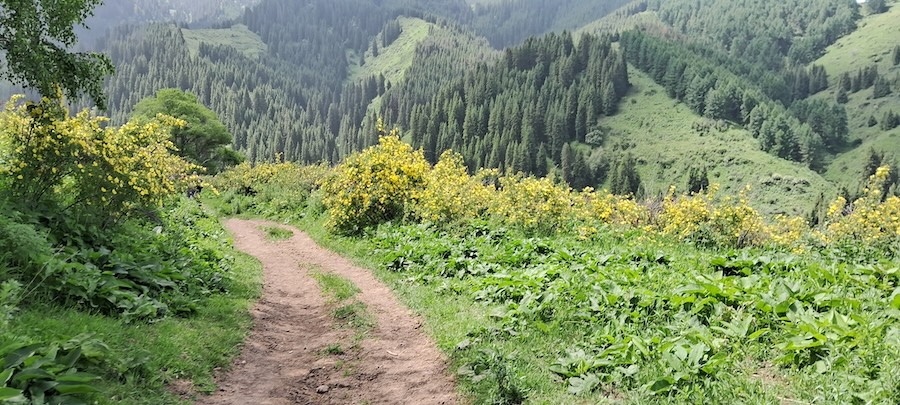
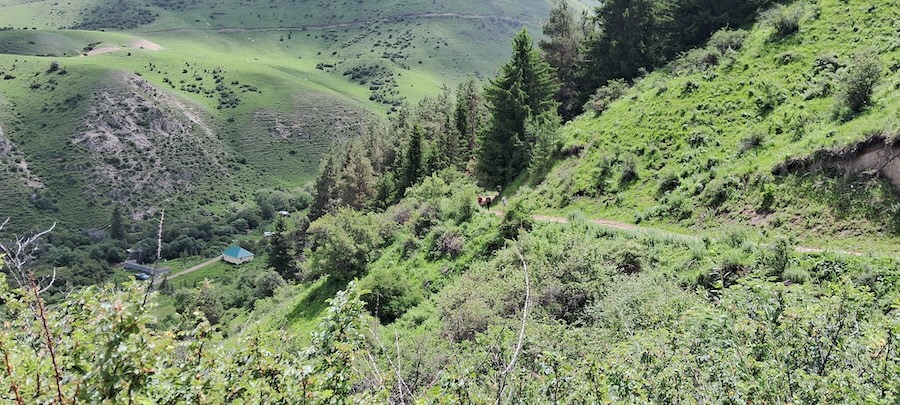
The Hiking trail in the Chon-Kemin Valley.
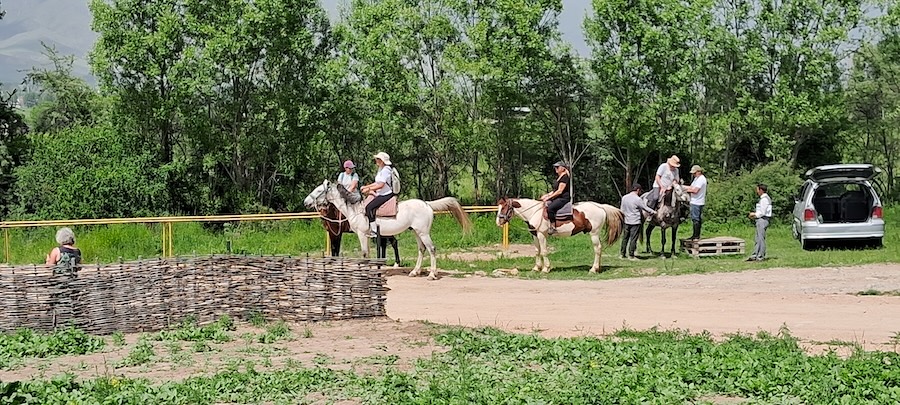
Horseback riding at Chon-Kemin Valley.
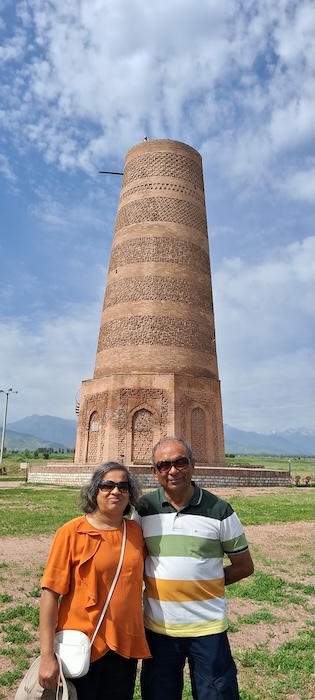
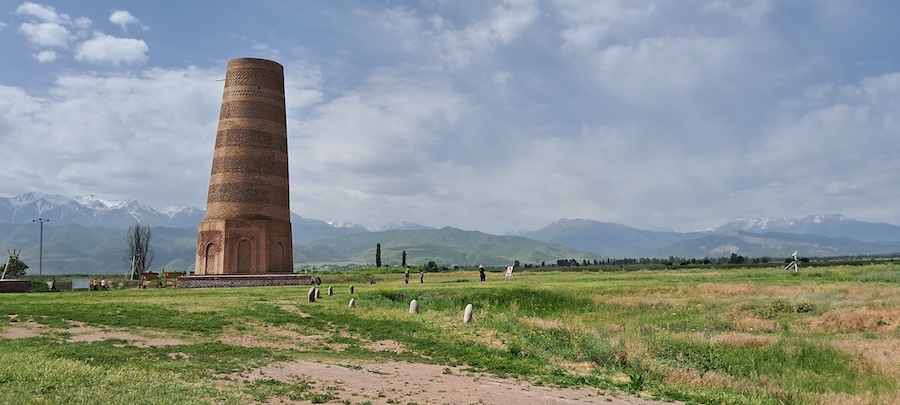
The Burana Tower, a famous historical minaret located in the Chuy Valley of northern Kyrgyzstan.
The historic Burana Tower, an ancient 11th-century minaret nestled in the Chuy Valley of northern Kyrgyzstan. It is one of the oldest architectural monuments in Central Asia and a key landmark along the UNESCO World Heritage-listed Silk Road routes.
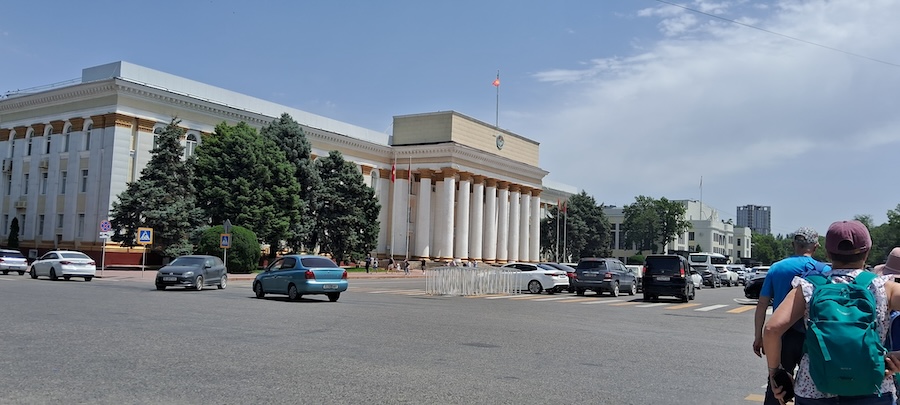
This Soviet-era neoclassical building houses important state institutions, located in the capital city of Bishkek.
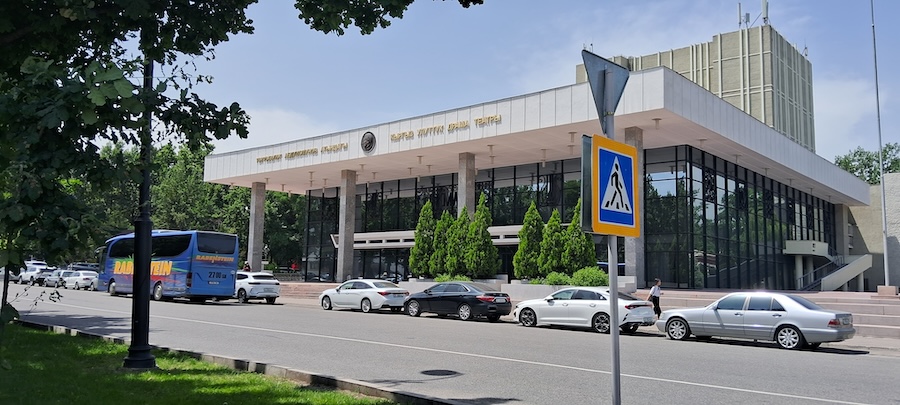
The Toktobolot Abdumomunov Kyrgyz National Academic Drama Theatre, located in the heart of Bishkek. The venue regularly showcases productions spanning classic world theater as well as traditional Kyrgyz national drama.
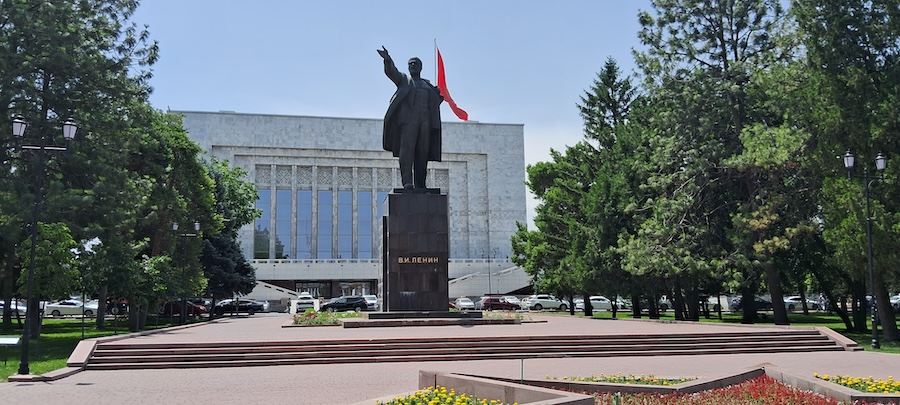
The iconic Vladimir Lenin Statue located in Bishkek
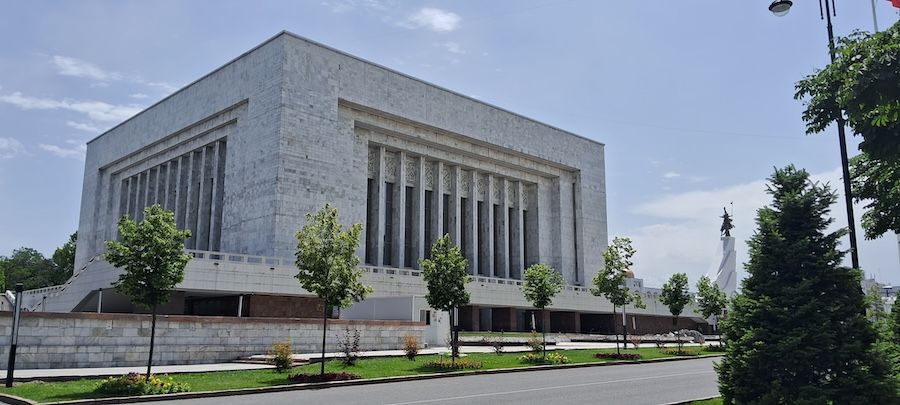
The State History Museum (formerly known as the Lenin Museum), a premier cultural institution located in the heart of downtown Bishkek
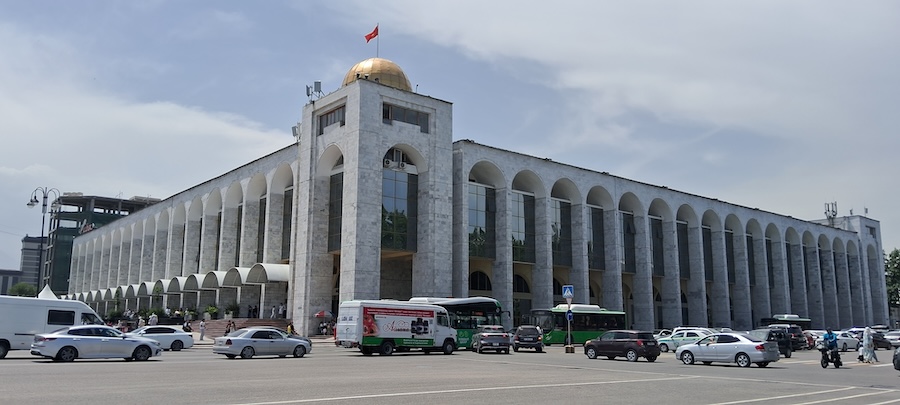
The buiding is a commercial and administrative structure located on Ala-Too Square in the heart of Bishkek, the city's primary public square.
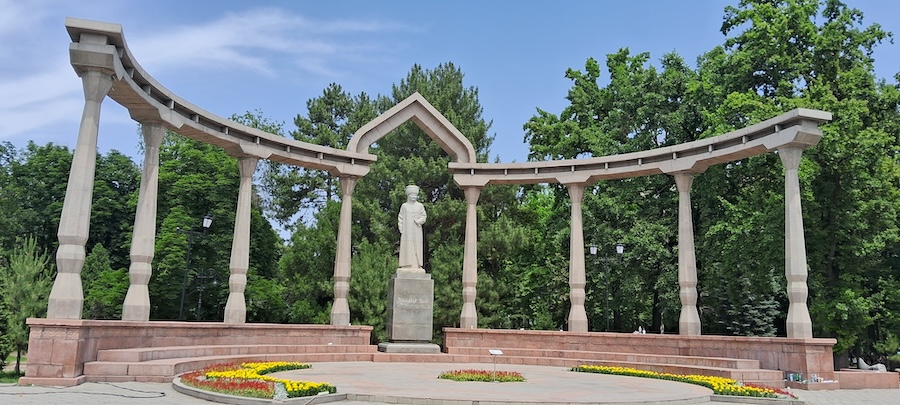
The monument of Kurmanjan Datka, an exceptionally influential stateswoman and military leader widely revered as the "Queen of the Mountains" or "Queen of the South". She skillfully navigated complex geopolitical relations to safeguard her people during the regional integration with the Russian Empire.
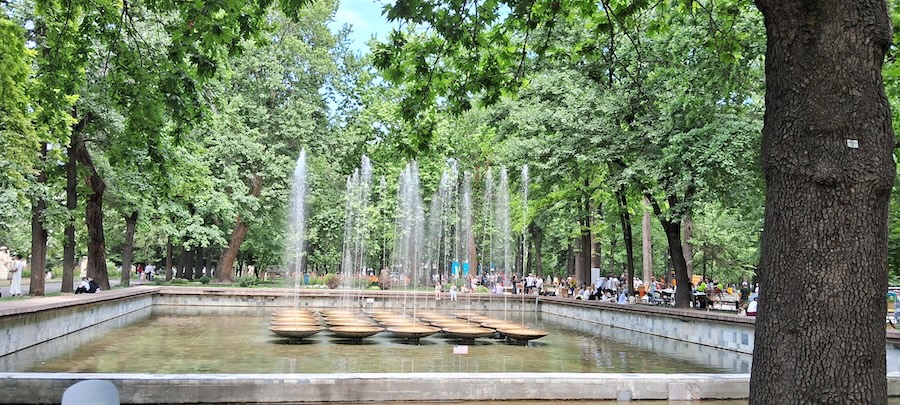
The iconic Fountain "25 Bowls", a famous architectural feature situated within Oak Park (Chingiz Aitmatov Park) in the center of Bishkek,
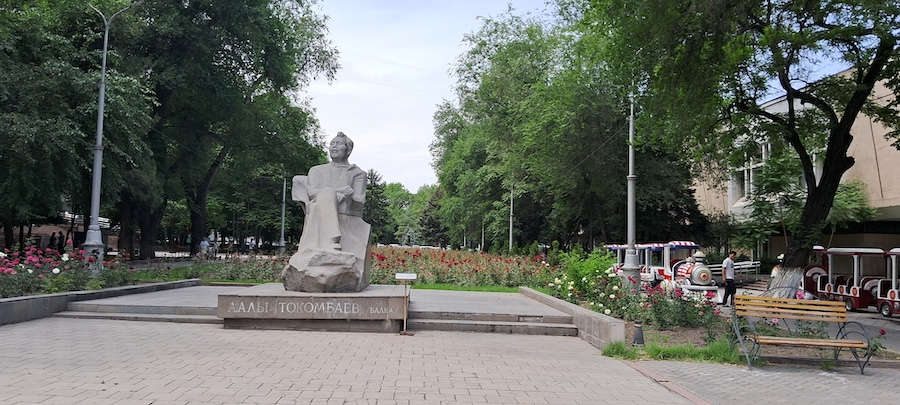
The stone statue of Aaly Tokombaev (1904–1988), a widely celebrated Soviet Kyrgyz poet, novelist, composer, and a foundational figure of modern Kyrgyz literature.
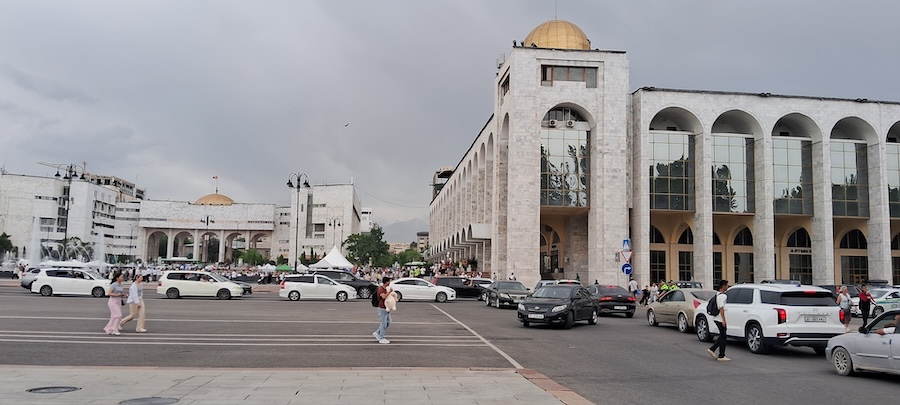
Ala-Too Square, the iconic main civic plaza located in the center of Bishkek,
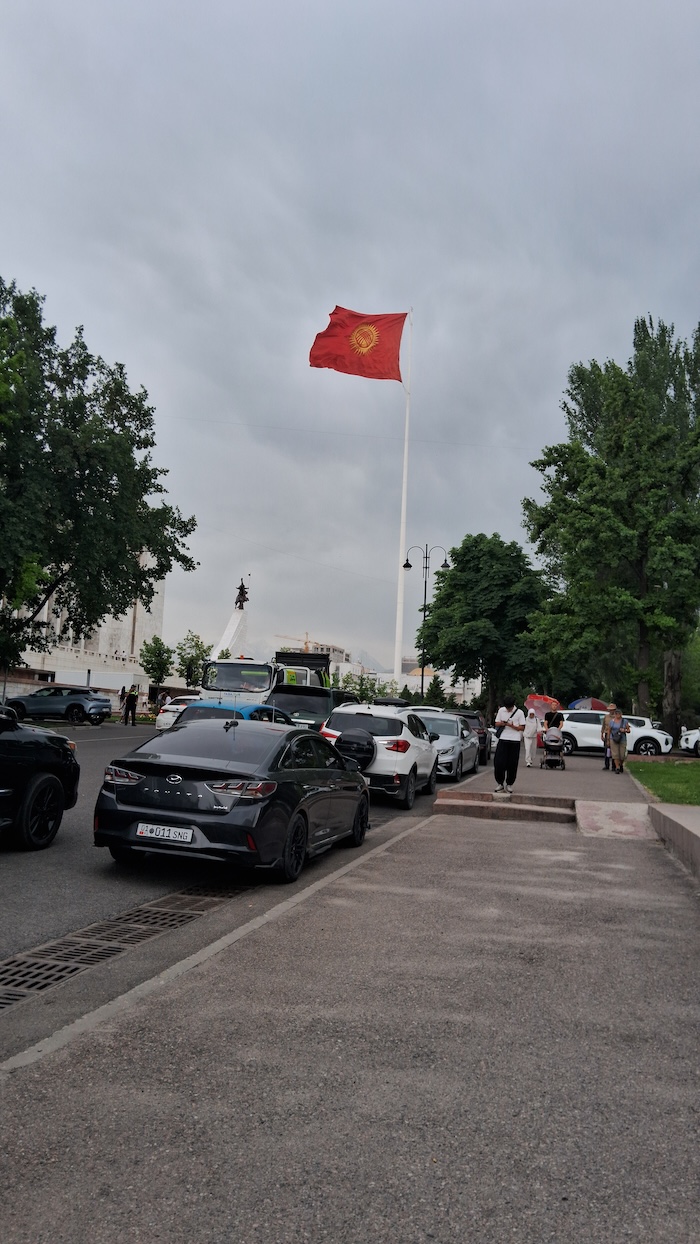
The Ala-Too Square, the central public square. Flying high in the center is the distinctive red and yellow national flag of Kyrgyzstan
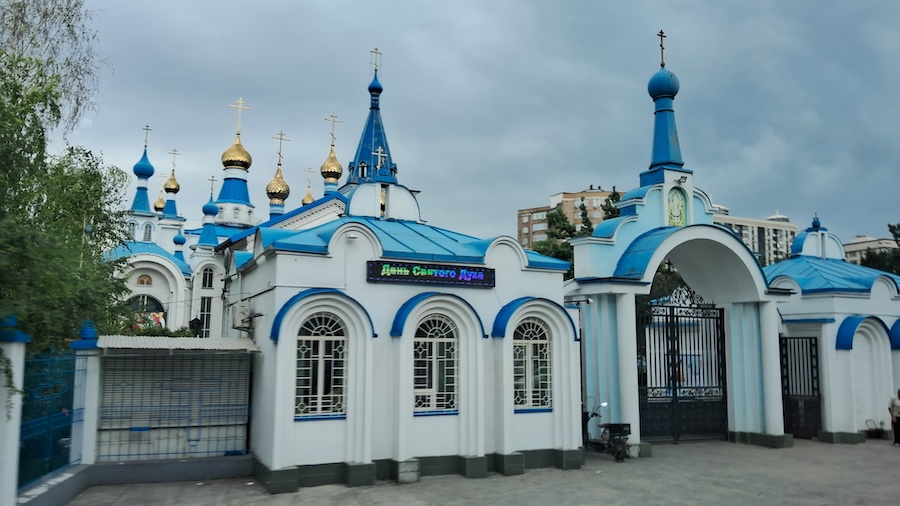
The Holy Resurrection Cathedral, a landmark Russian Orthodox church located in Bishkek. |