|
Uzbekistan is a Central Asian nation and former Soviet republic. It is known for its mosques, mausoleums and ,famous for its historic Silk Road cities like Samarkand, Bukhara, and Khiva. Its capital and largest city is Tashkent. We visited in June 2026.
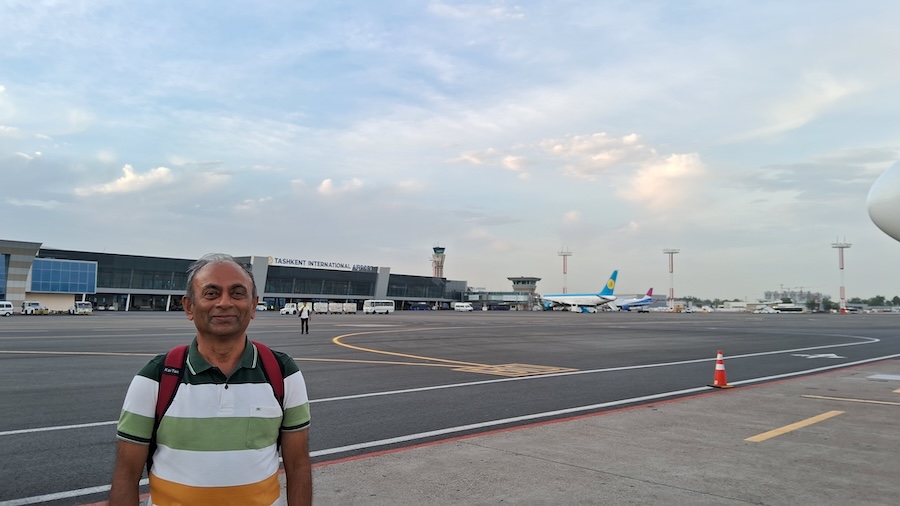
Tashkent International Airport
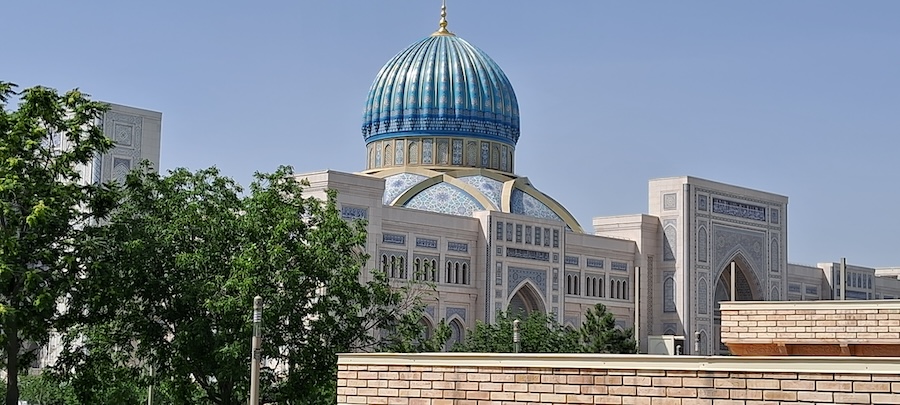
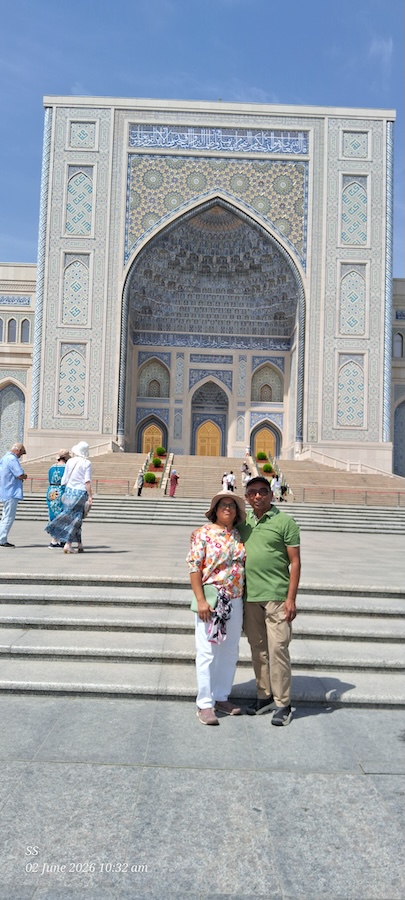
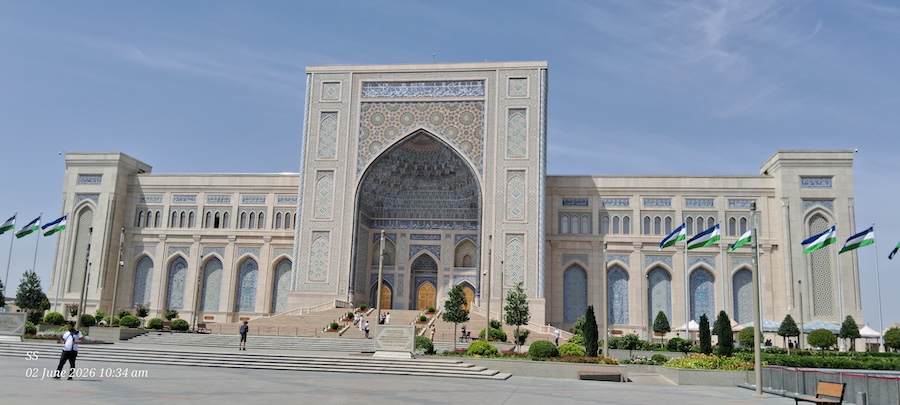
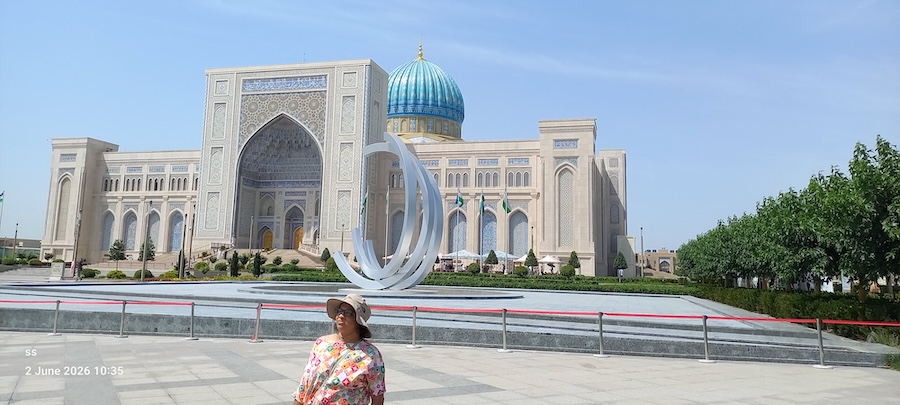
The magnificent Center for Islamic Civilization.
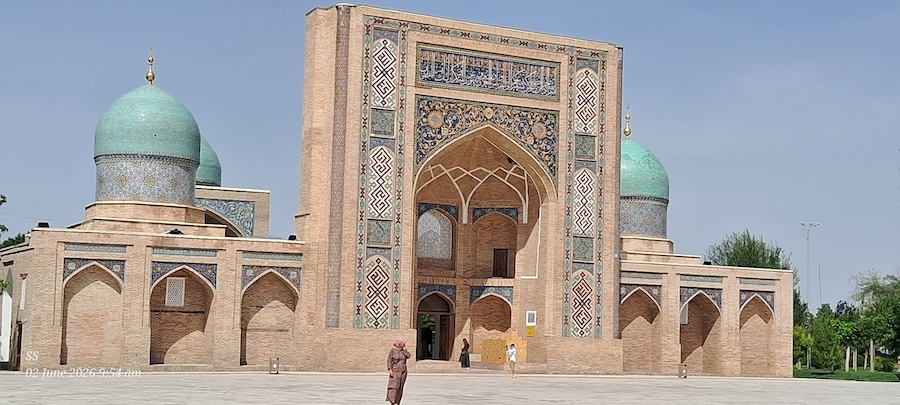
The historic Barak Khan Madrasah, located inside the famous Hazrati Imam Complex in the old city area of Tashkent
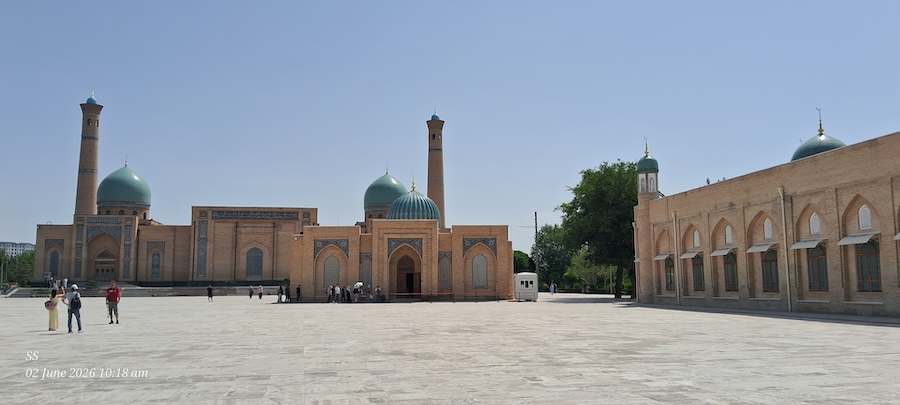
The Hazrati Imam Complex (also widely known as Khast Imam Square), which serves as the religious and spiritual heart of Tashkent
Photo stop at the Center of Islamic Civilization.
The grand Center for Islamic Civilization, an architectural landmark located within the historic Hazrati Imam complex in Tashkent
Photo stop at the Center of Islamic Civilization.
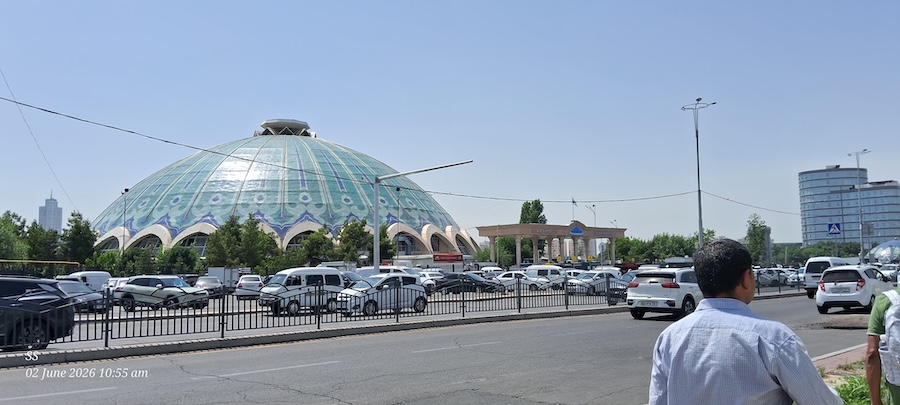
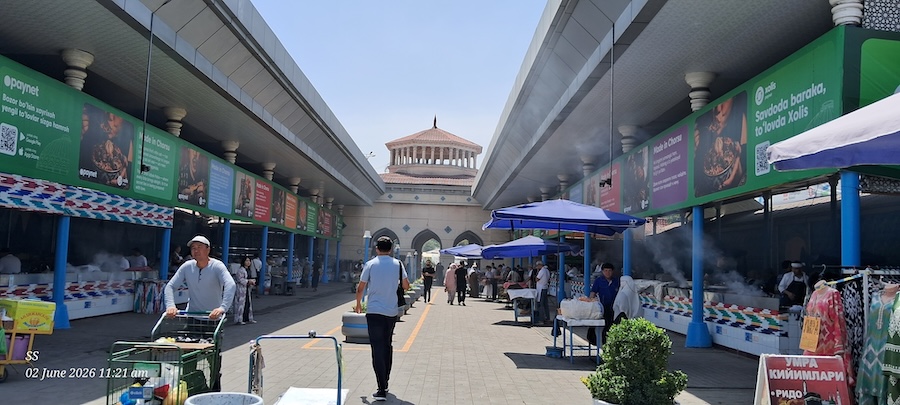
The famous Chorsu Bazaar, The name "Chorsu" translates from Persian to mean "four roads" or "crossroads," highlighting its location along the ancient Silk Road.
The famous open-air Chorsu Food Rows, locally known as the "Gluttonous Row". This vibrant alleyway is a central attraction for authentic Uzbek street food culture. Dozens of vendors set up side-by-side cooking traditional dishes in massive iron cauldrons (kazans) and charcoal grills
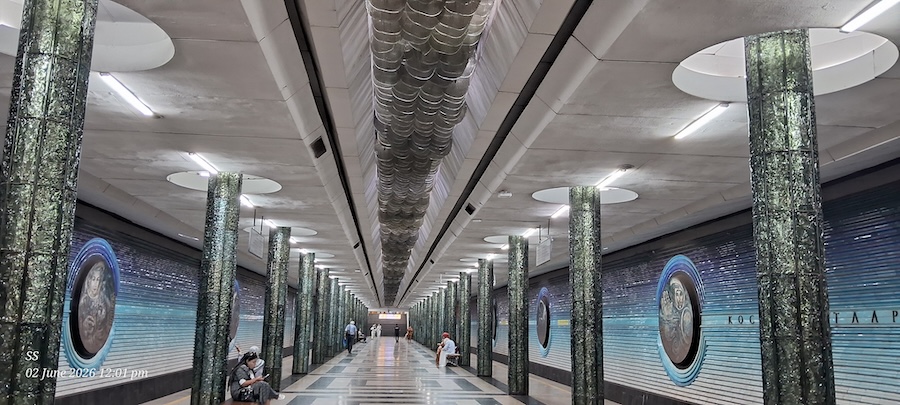
The iconic Kosmonavtlar (Cosmonauts) Metro Station, an underground architectural masterpiece located on the Uzbekistan Line of the Tashkent Metro system in Tashkent. The station features a retro-futuristic design dedicated to Soviet space exploration.
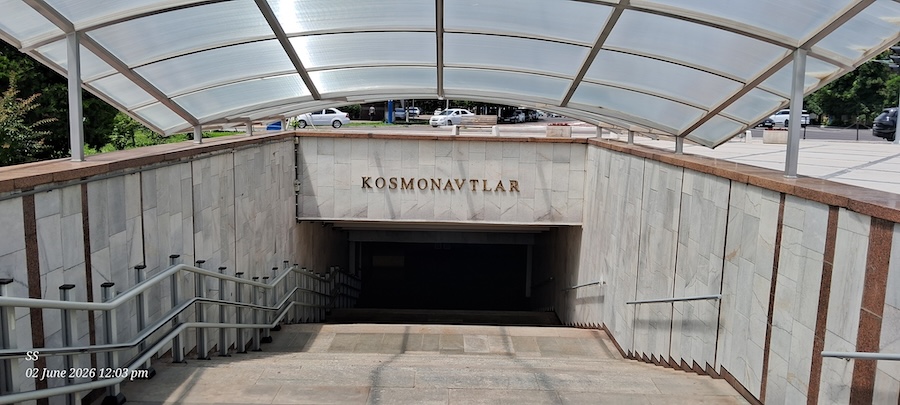
The stairway entrance to the iconic Kosmonavtlar (Cosmonauts) Metro Station.
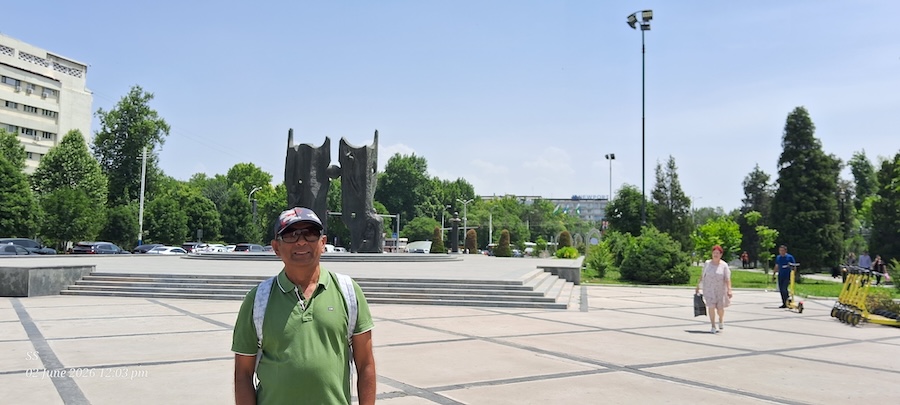
For a photo stop in front of the Cosmonauts Monument.
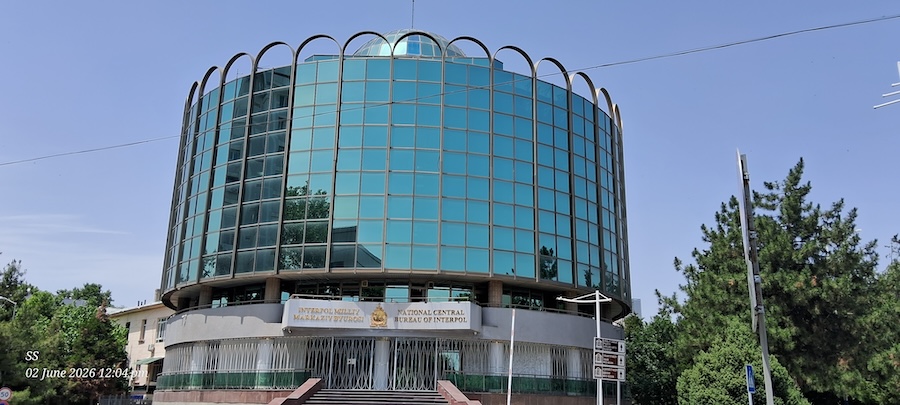
The National Central Bureau of Interpol in Tashkent.
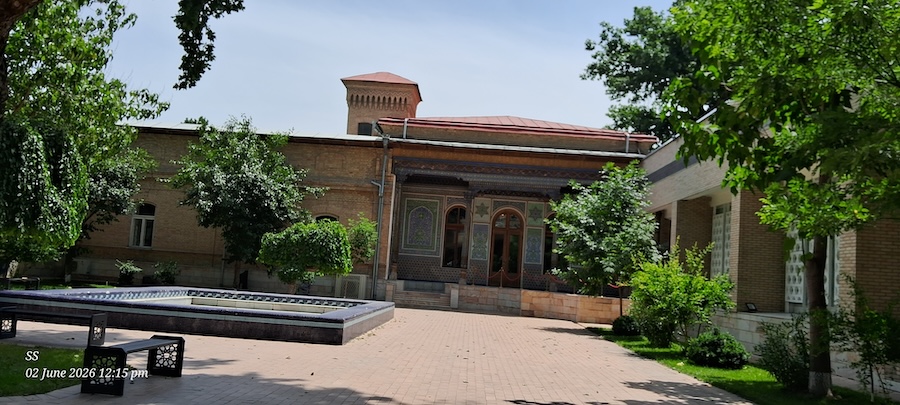
The central courtyard of the State Museum of Applied Arts of Uzbekistan.
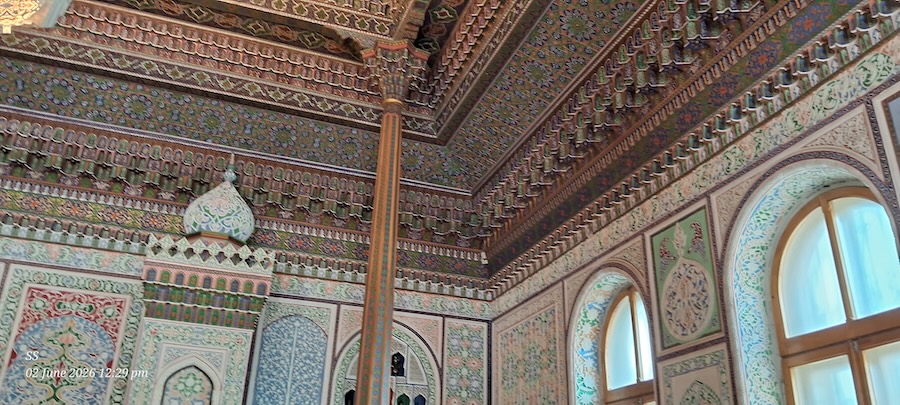
The intricately decorated main hall of the State Museum of Applied Arts of Uzbekistan.
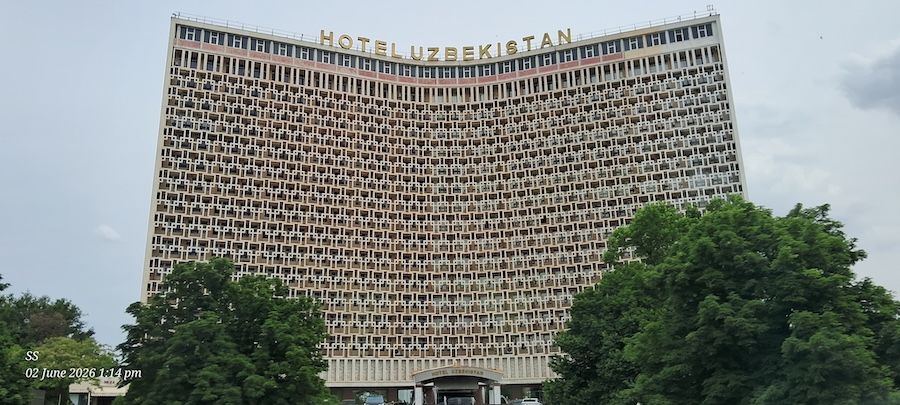
Hotel Uzbekistan, a legendary 17-story landmark located in the heart of Tashkent. Opened in 1974, it stands as one of the most iconic and recognizable symbols of late-Soviet modernist and brutalist architecture in Central Asia.
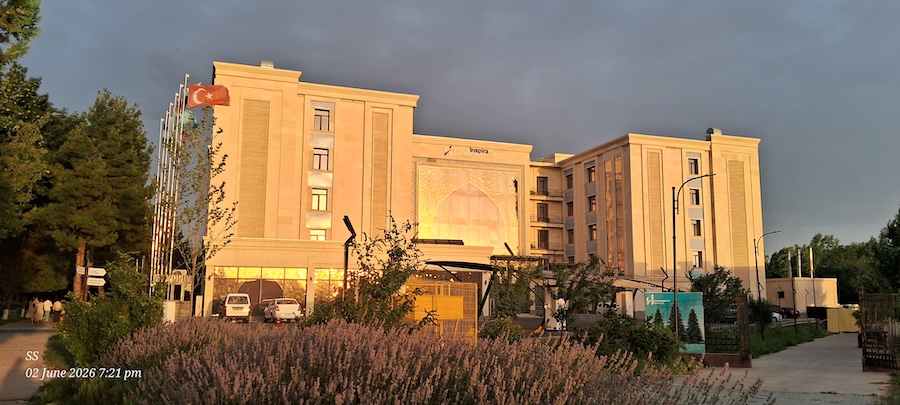
Our hotel in Tashkent. The Hotel Inspira-S.
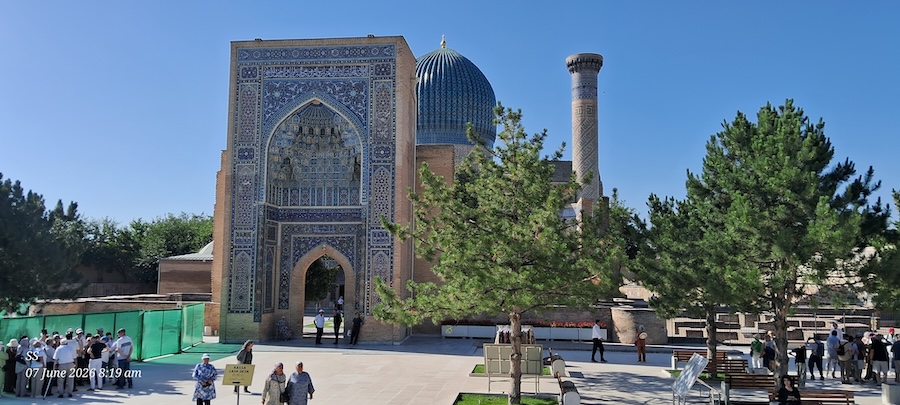
The Gur-e-Amir Mausoleum, located in the historic city of Samarkand. Built in the early 15th century, it is the final resting place of the legendary Turco-Mongol conqueror Amir Timur
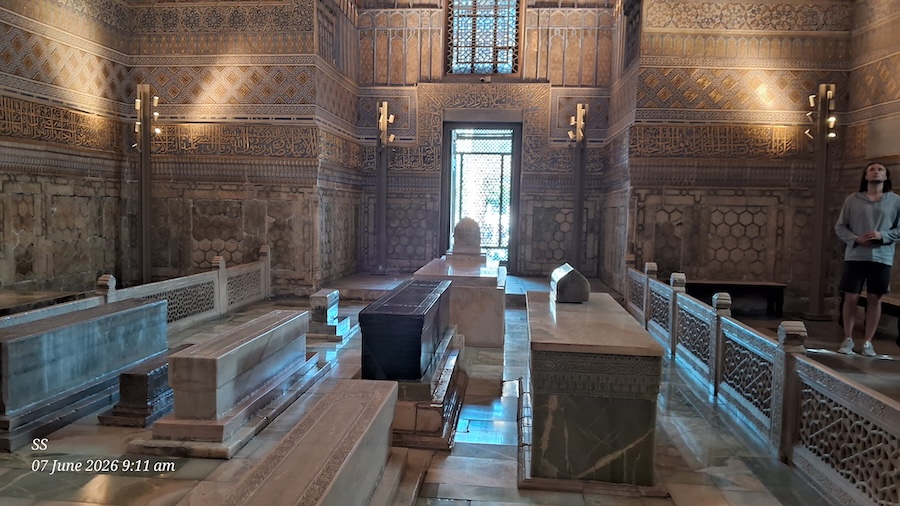
The dark block in the center is Timur's tombstone, carved from a rare, single massive block of dark green jade. Surrounding Timur are the cenotaphs of his close family members and descendants from the Timurid Dynasty. These include his sons Shah Rukh and Miran Shah, his grandsons Ulugh Beg (the famous astronomer) and Muhammad Sultan, as well as his revered spiritual teacher, Sayyid Baraka
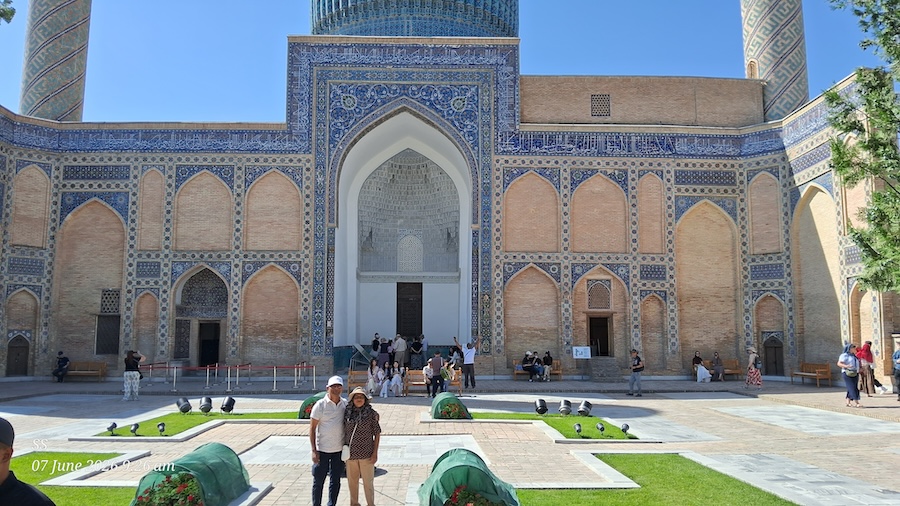
The inner courtyard of the Amir Temur Mausoleum Gur-i Amir Complex. Gur-e-Amir" translates directly from Persian to English as "Tomb of the King".
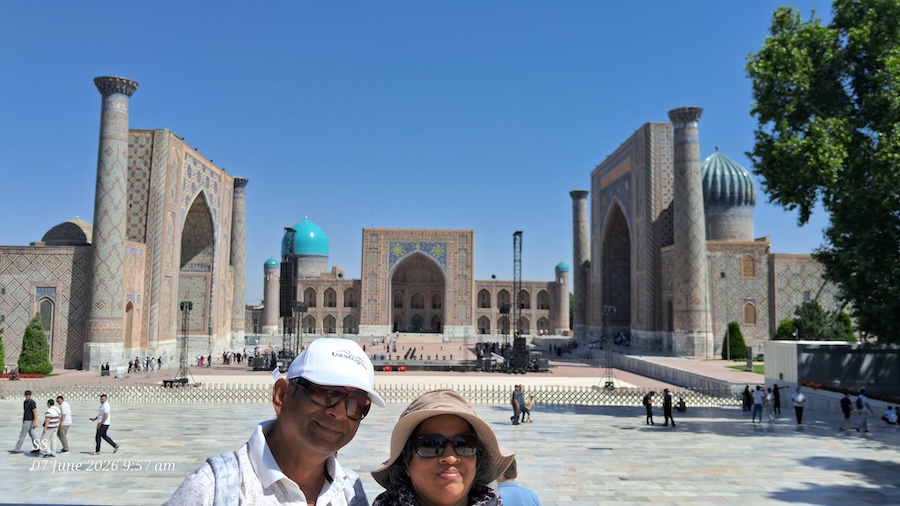
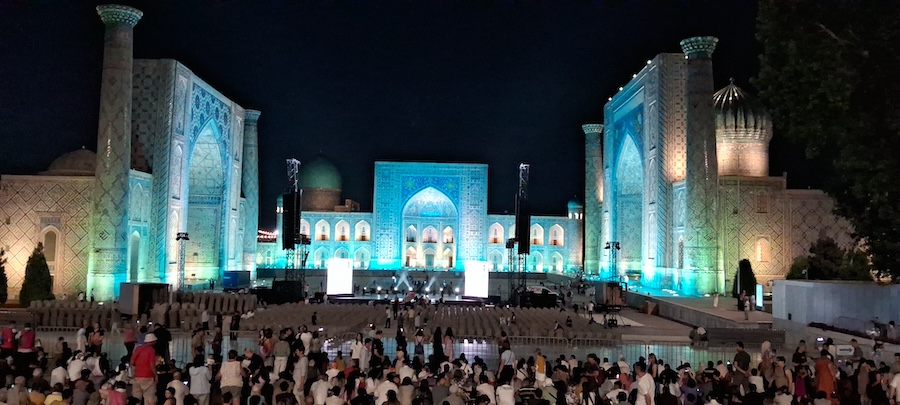
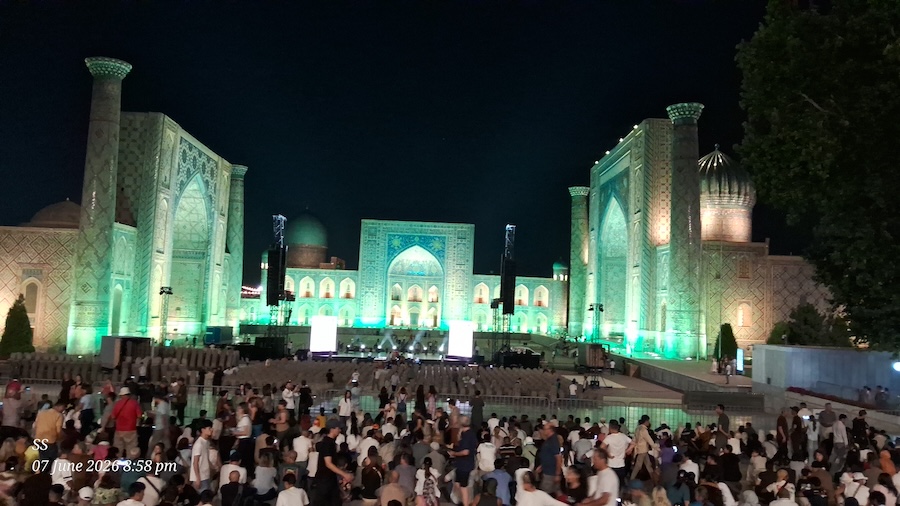
The historic Registan Square. The complex is a UNESCO World Heritage Site renowned for its monumental Islamic architecture. It is famous for its three massive, beautifully preserved madrasas (Islamic schools)
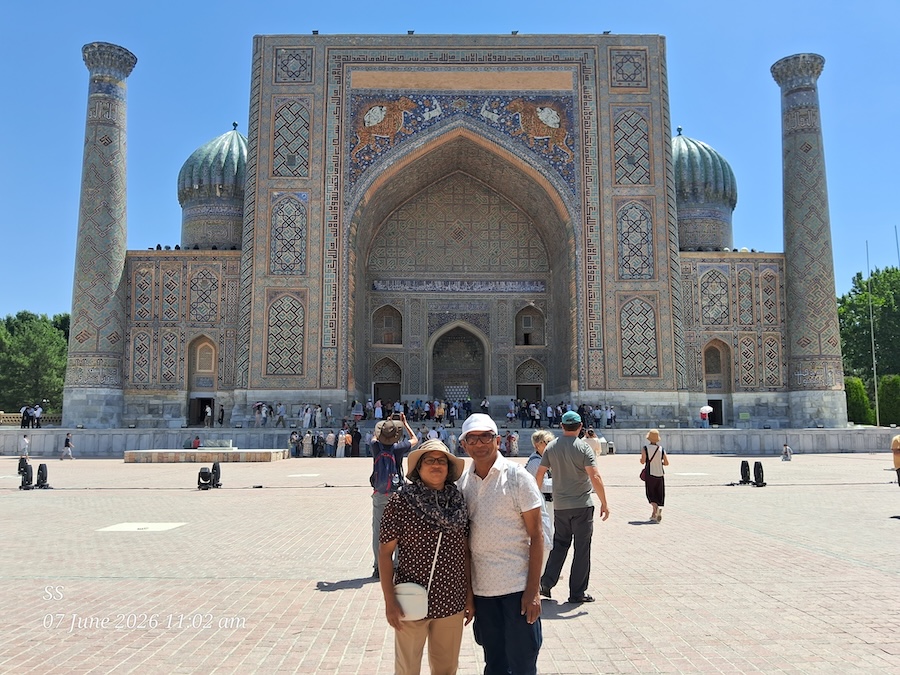
The Sherdor Madrasah (also spelled Sher-Dor), located on the eastern side of the legendary Registan Square
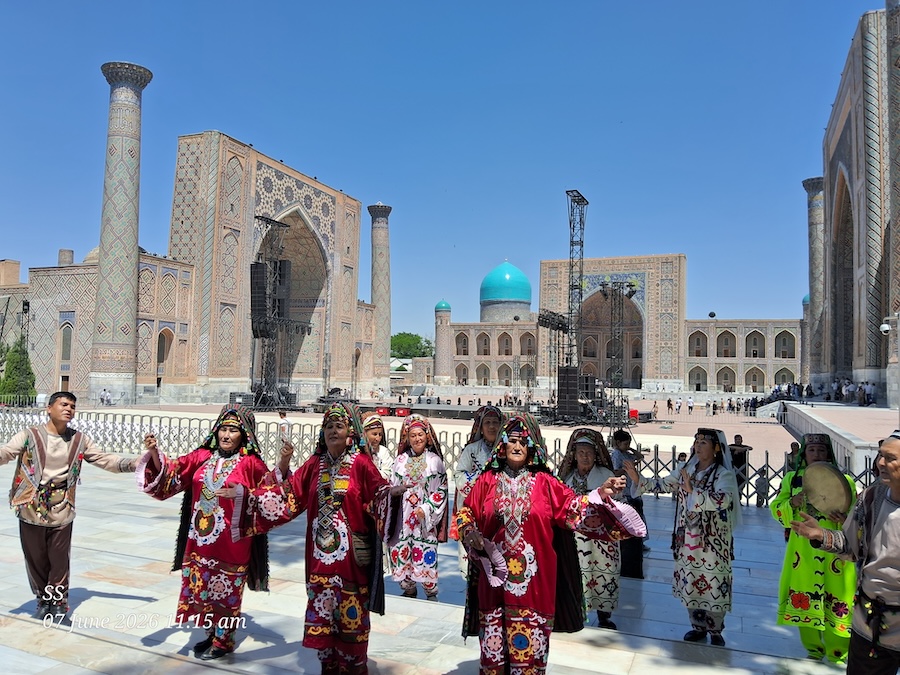
Performers dressed in vibrant, traditional Central Asian attire dancing at the historic Registan Square in Samarkand
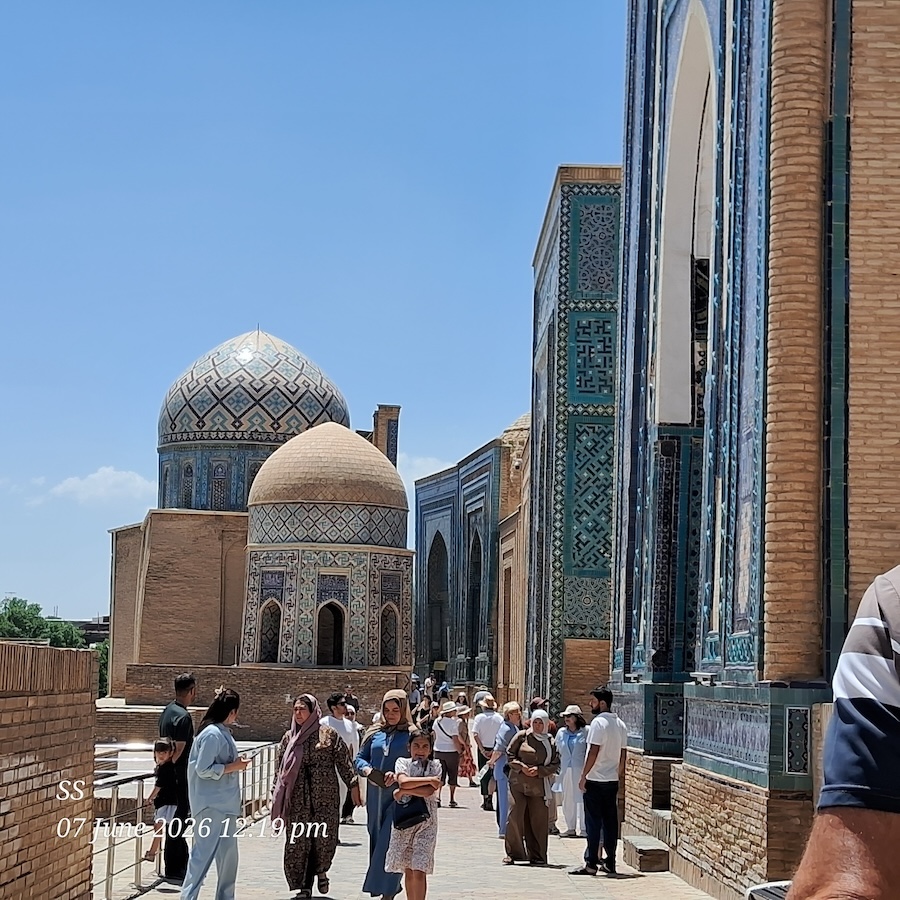
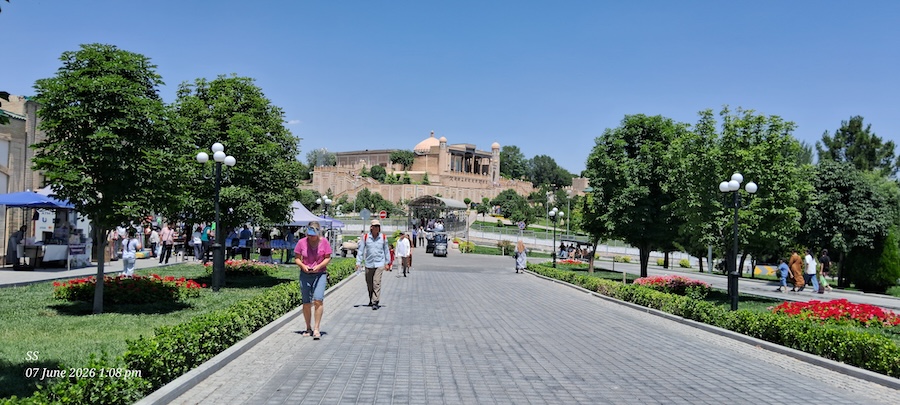
The Shah-i-Zinda Necropolis, Cemetery site with many ornately decorated, colorful tombs & ancient mosaic-tiled mausoleums.
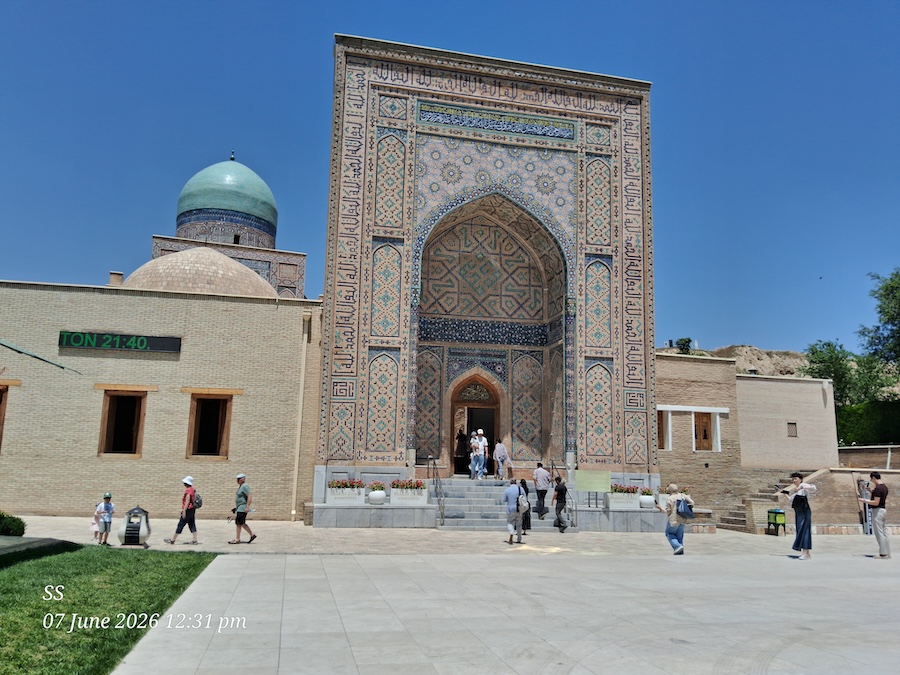
The main entrance portal of the world-famous Shah-i-Zinda necropolis. The Shah-i-Zinda ensemble includes mausoleums and other ritual buildings of the 11th – 15th and 19th centuries.
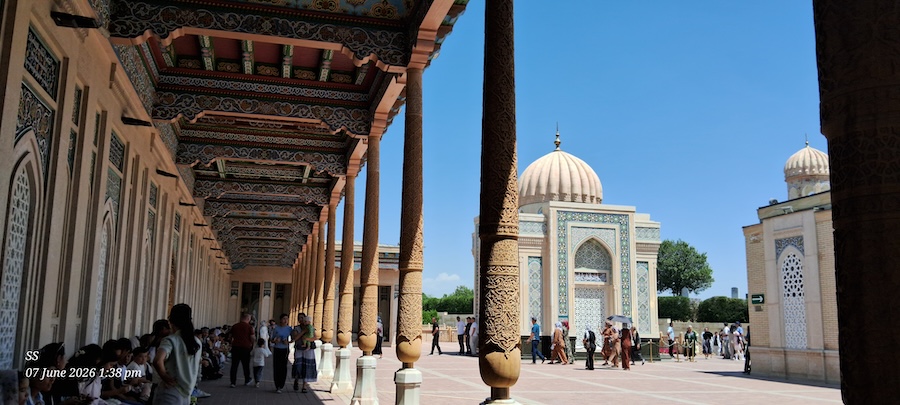
The Hazrat Khizr Mosque in Samarkand. Built originally in the 8th century, it is considered one of Samarkand's oldest Islamic religious structures. The Modern Complex, after being destroyed by Genghis Khan, it was rebuilt during the 19th century.
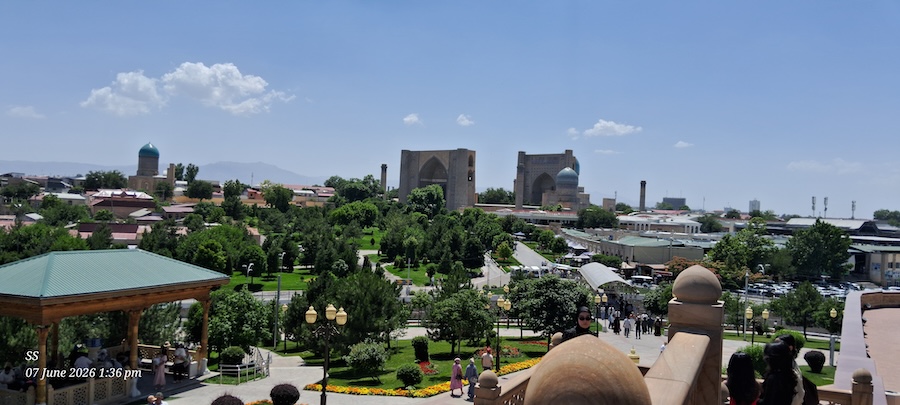
A breathtaking panoramic view of the iconic Bibi-Khanym Mosque complex, framed by beautifully manicured green parks and pedestrian walkways. Took photo is taken from the elevated observation terrace of the historic Hazrat Khizr Mosque.
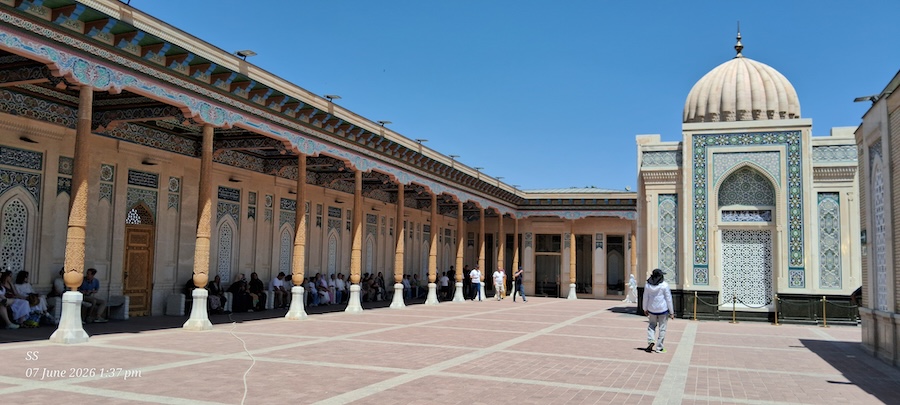
The inner courtyard of the historic Hazrat Khizr Mosque complex, which houses the modern Mausoleum of Islam Karimov, the first president of independent Uzbekistan.
The Hazrat Khizr Mosque and the Mausoleum of Islam Karimov located in the historic Silk Road city of Samarkand
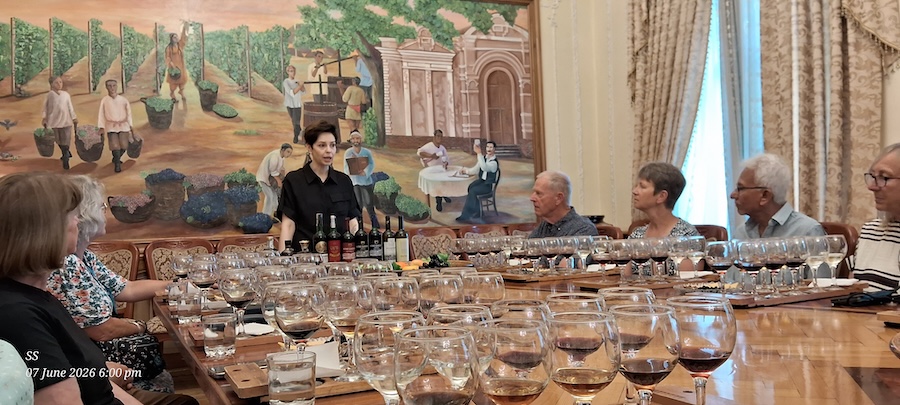
Wine tasting session in Samarkand
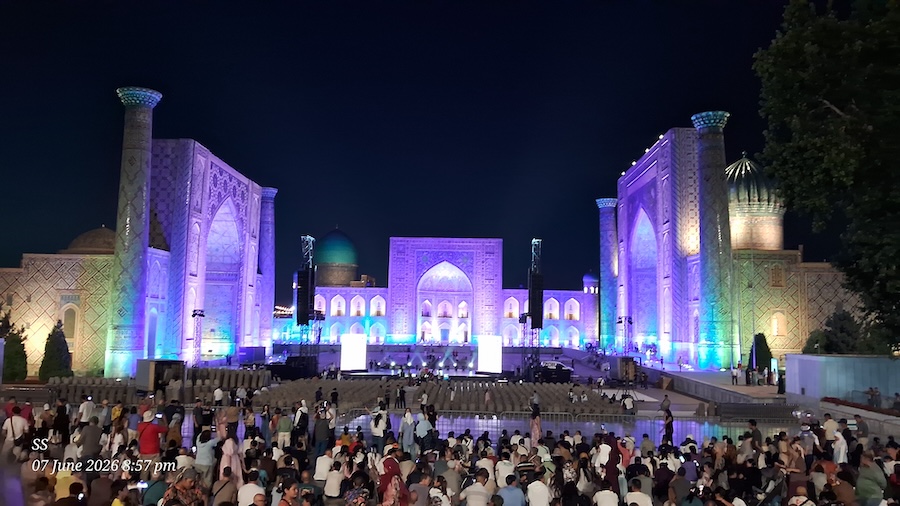
An open-air concert setup at the historic Registan Square in Samarkand
The historic Registan Square in Samarkand
The historic Registan Square in Samarkand
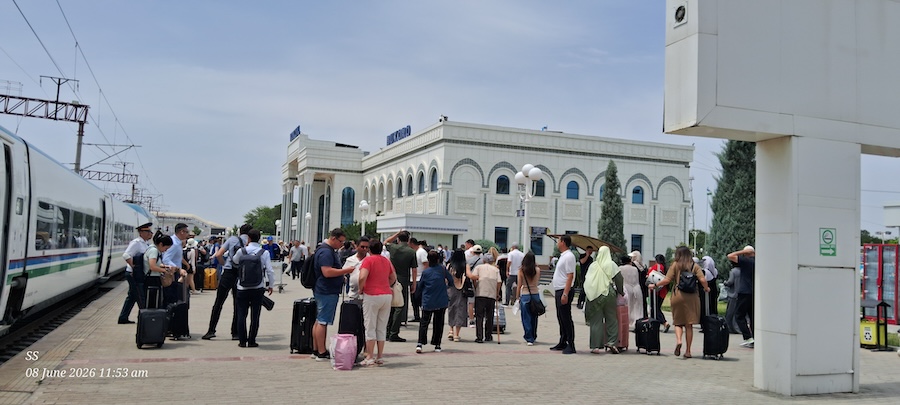
Bukhara Railway Staion. We travelled from Samarkand to Bukhara by the fast Afrosiyob bullet trains.
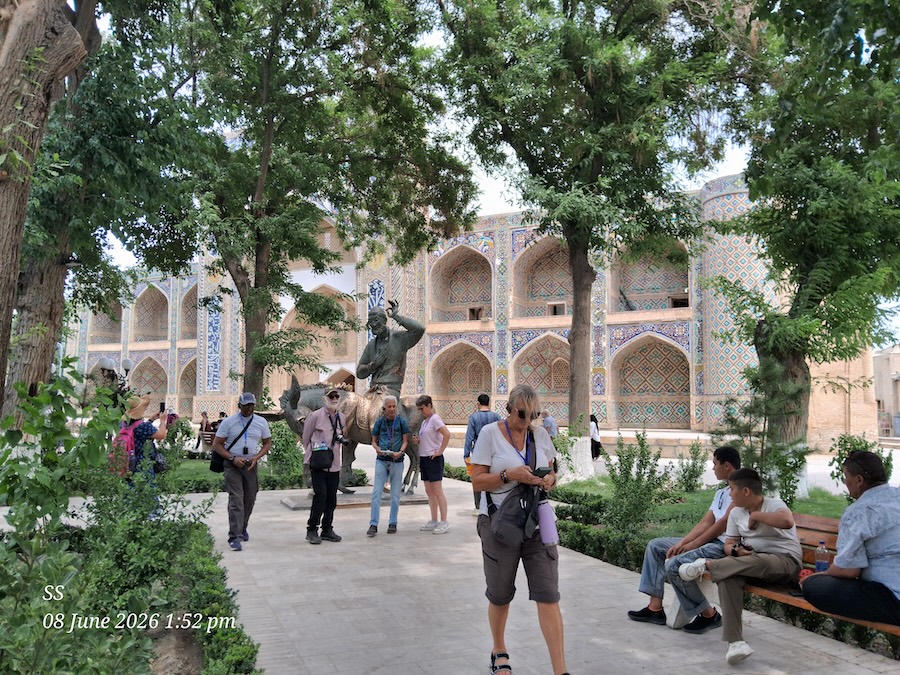
The central courtyard of the historic Lyabi-Hauz complex in the city of Bukhara. The prominent tile-adorned building standing directly in the background is the Nadir Divan-begi Madrasah, an architectural monument built between 1622 and 1623. Originally intended as a caravanserai (a roadside inn for travelers and merchants), it was converted into an Islamic school (madrasah). The bronze monument standing in front of the building is the Statue of Khoja Nasreddin (also known as Mullah Nasruddin or Nasreddin Efendi.The legendary, sharp-witted Eastern folk hero and philosopher riding his signature companion donkey.
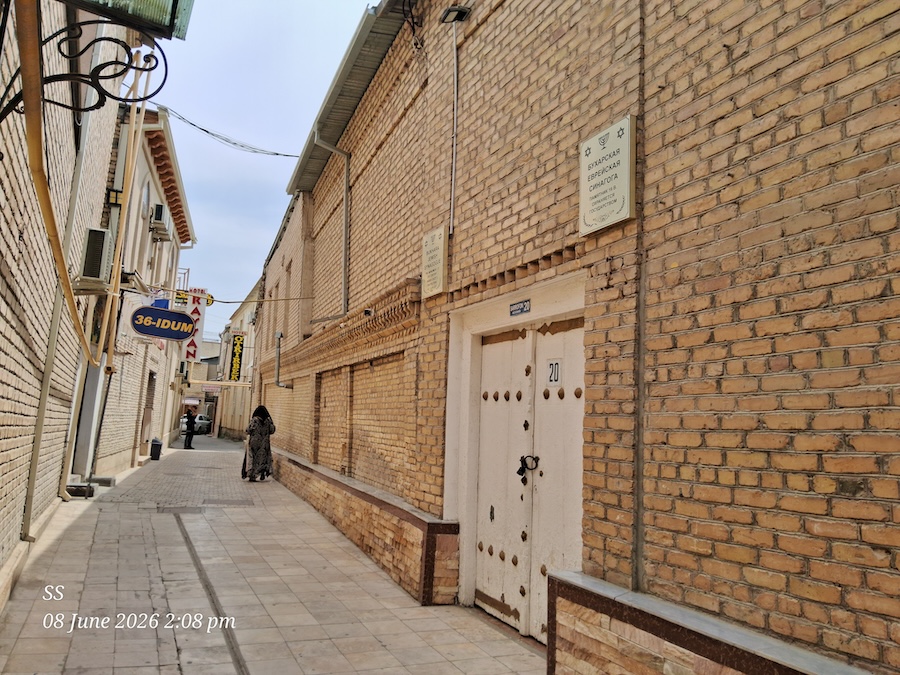
The entrance to the Bukhara Synagogue (also known as the Bukharan Jewish Synagogue) located in the historic old Jewish Quarter (Mahalla) of Bukhara.
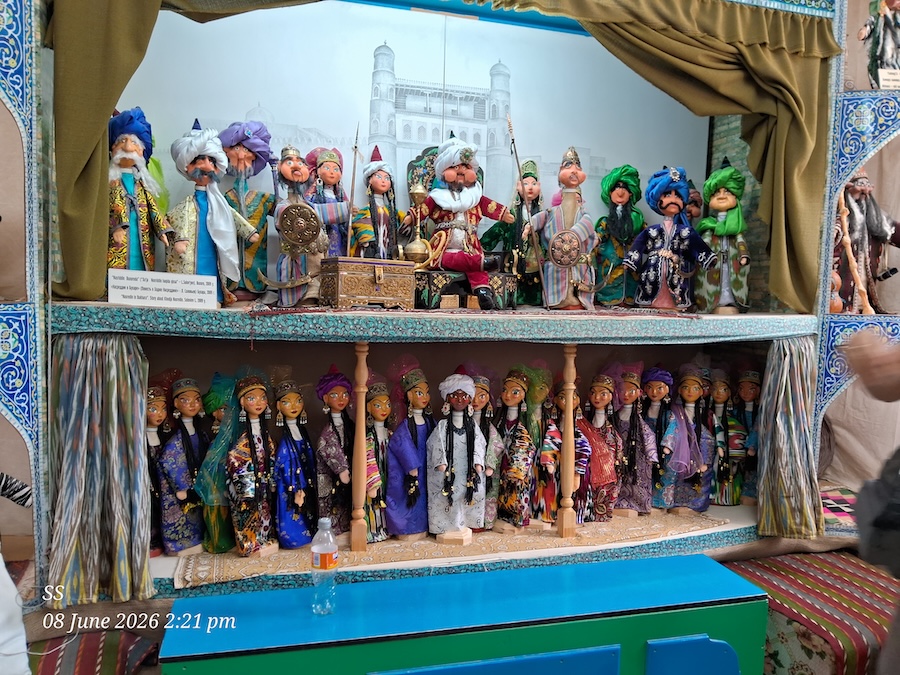
A collection of traditional handcrafted Uzbek puppets inside the Puppet Workshop Museum. Puppetry in Uzbekistan is a historical national craft that dates back to the 5th century, used heavily to tell folk stories, royal court histories, and satirical tales.
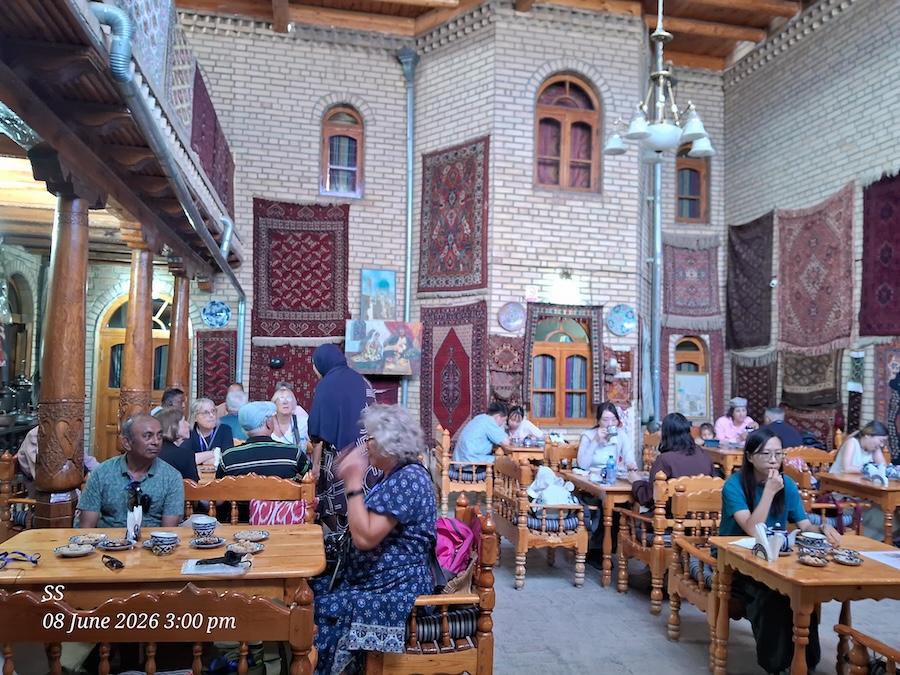
The Silk Road Teahouse, a historic and popular family-run teahouse with more than 600 years of spice trading history, offers only a variety of fine tea and dessert packages.
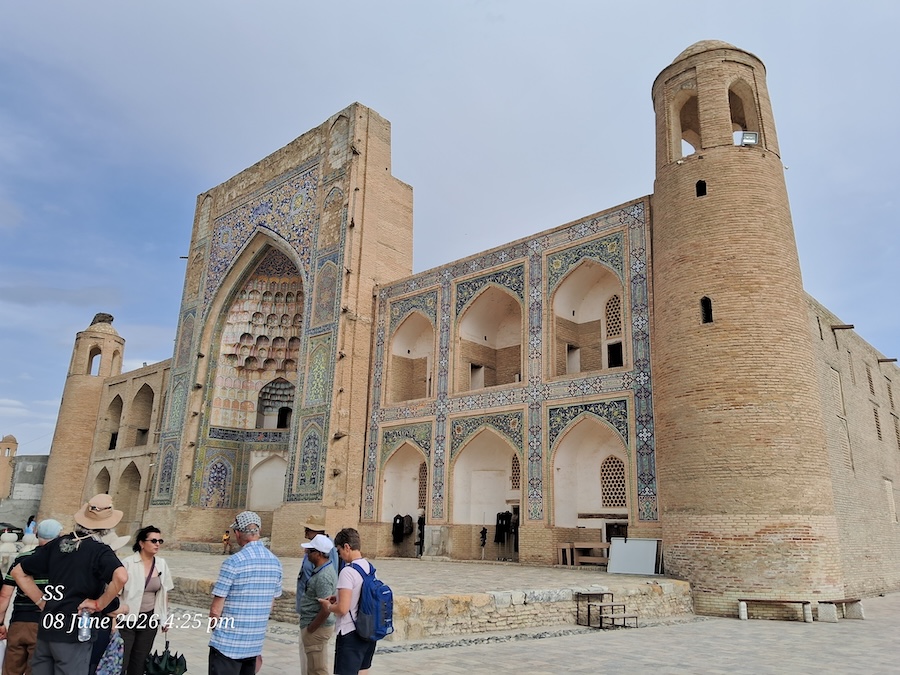
Abdulaziz Khan Madrasah is an architectural monument in the historical center of Bukhara, erected in 1651-1652 by order of the Uzbek ruler Abdulaziz Khan. It is believed that the building played a significant role in the formation of Central Asian architecture.Bukhara
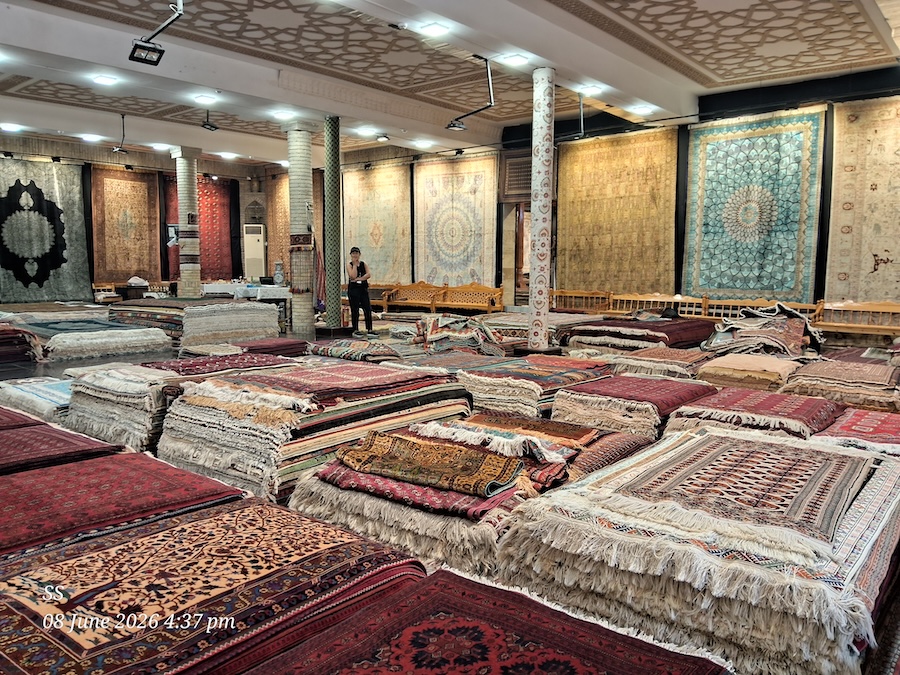
A traditional handmade carpet showroom located in Bukhara.
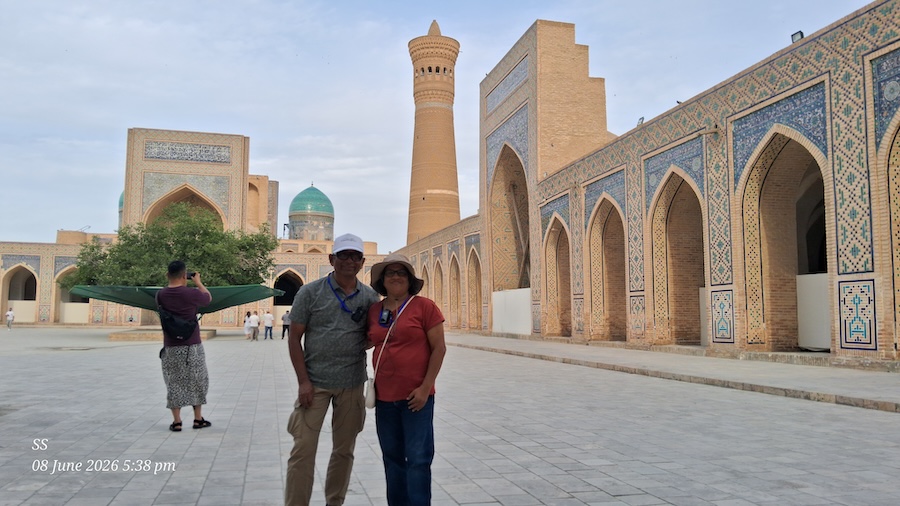
The central courtyard of the historic Kalan Mosque, a key component of the famous Po-i-Kalyan Complex. The name translates from Persian to "At the Foot of the Great One. The massive minaret that dominates the city's skyline. The Poi Kalyon complex has been described as the ‘beating heart’ of the Old Town of Bukhara.
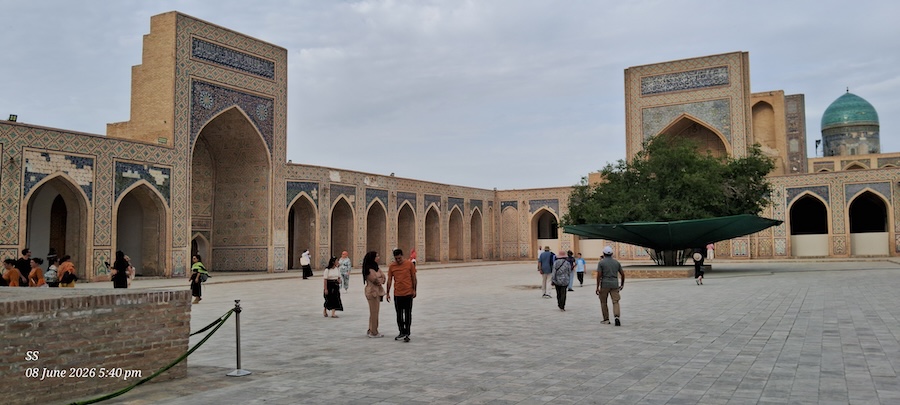
The inner courtyard of the Kalan Mosque situated within the historic Po-i-Kalyan Complex.
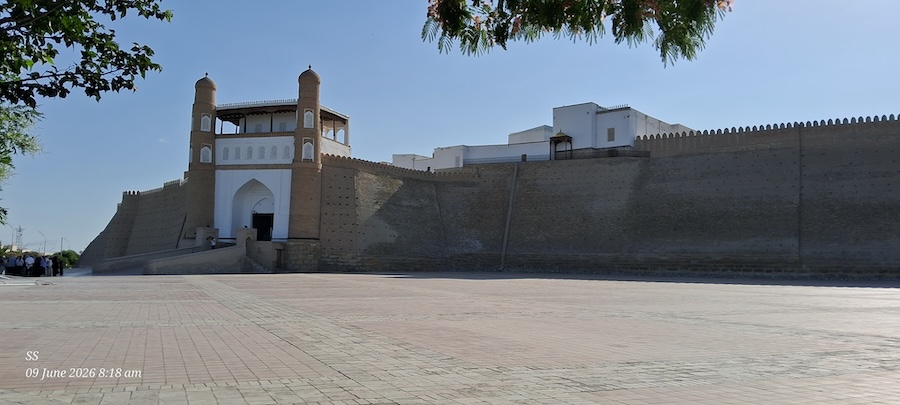
The spectacular main gate and towering outer walls of the Ark of Bukhara, a massive 5th-century fortress located in Bukhara.
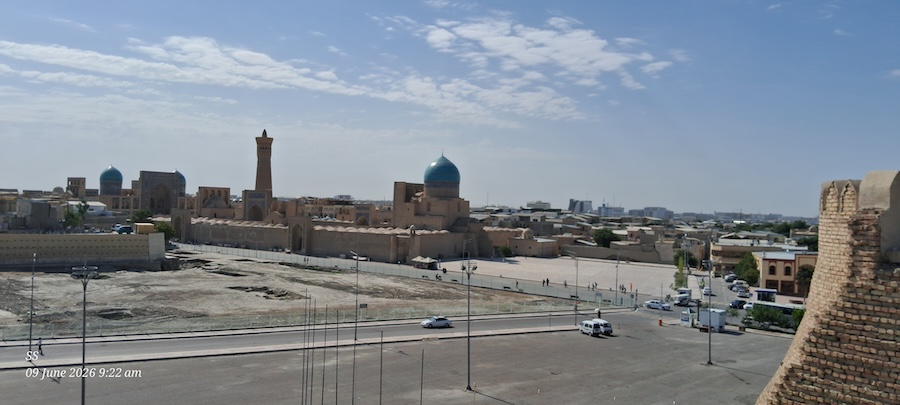
The panoramic view of the Po-i-Kalyan Complex located in the historic heart of Bukhara. The photograph is taken from the viewpoint atop the massive walls of the Ark of Bukhara.
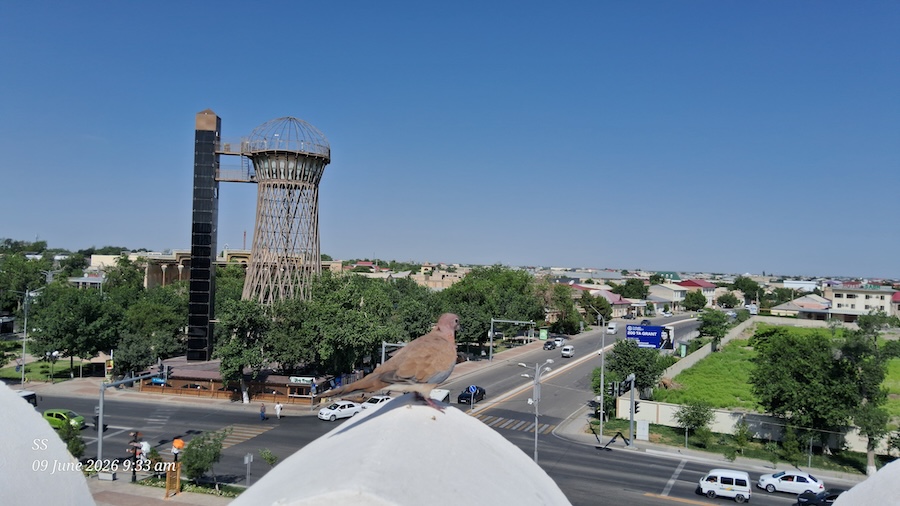
The famous Shukhov Tower (also known as the Bukhara Tower). It originally functioned as the primary water tower for Bukhara's urban water system. It served this purpose until a fire destroyed its inner components and wooden cladding in 1975.
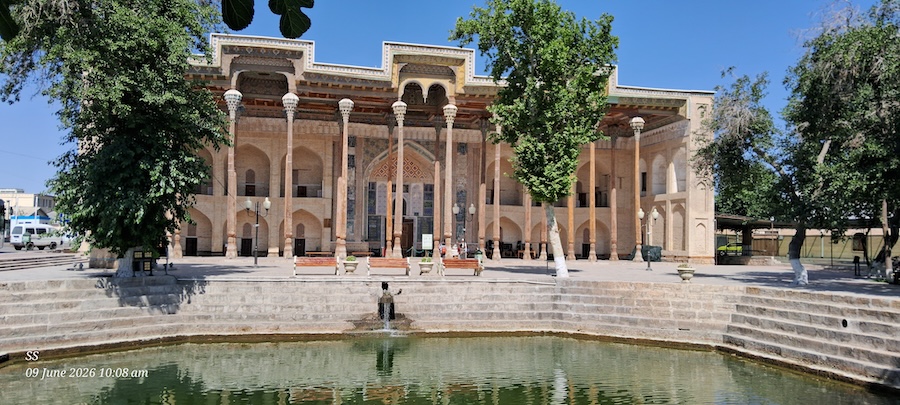
The historic Bolo Haouz Mosque. Built in 1712,is inscribed on the UNESCO World Heritage Site list
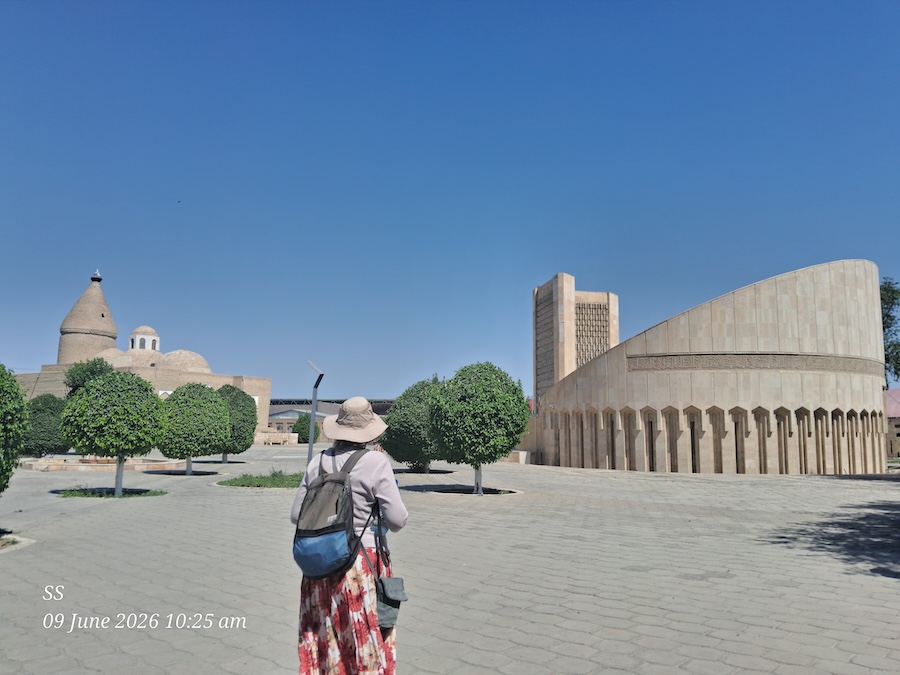
The iconic square in Bukhara, showcasing two architecturally distinct religious monuments side by side: the historic Chashma-Ayub Mausoleum on the left and the modern Memorial Museum of Imam al-Bukhari on the right.
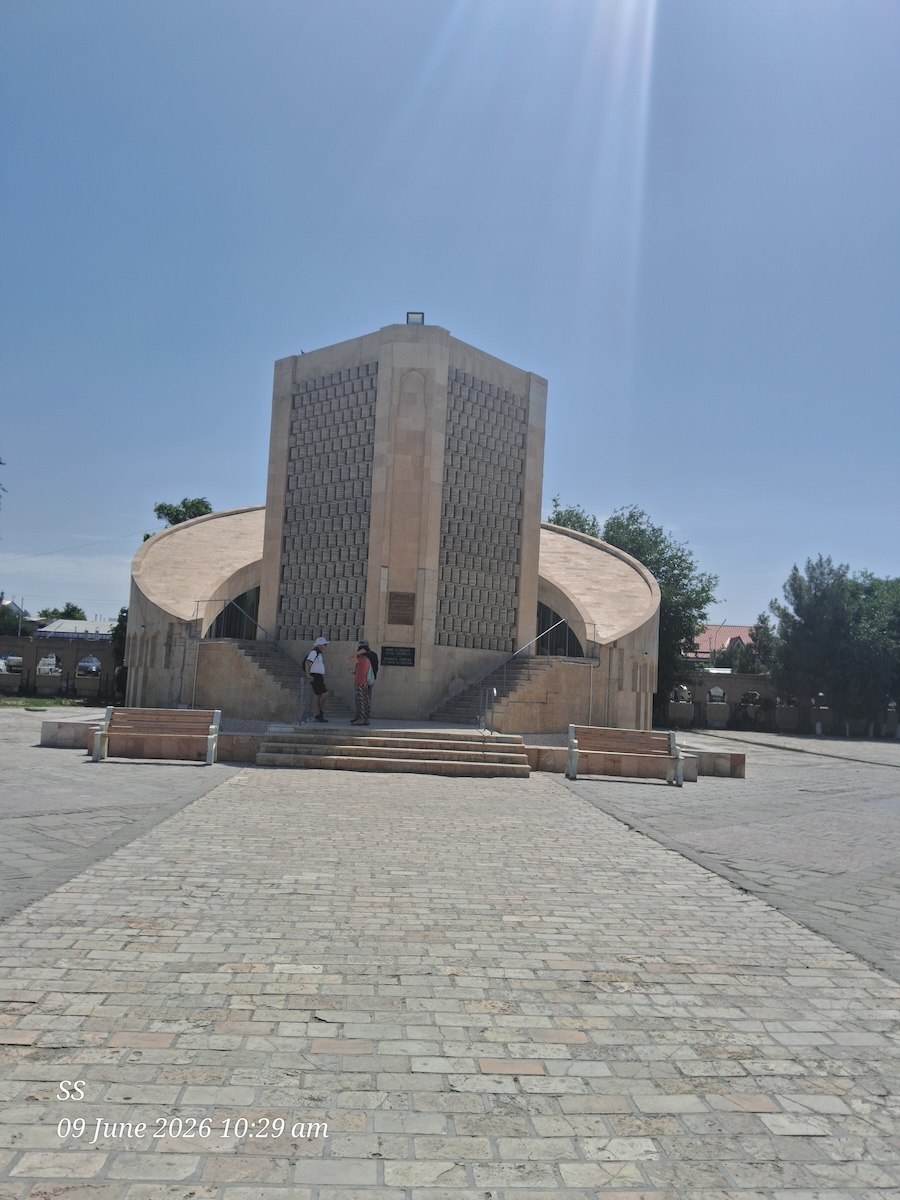
The Imam al-Bukhari Memorial Museum. The shape of the building is deliberately crafted to resemble a giant open book facing a crescent moon.
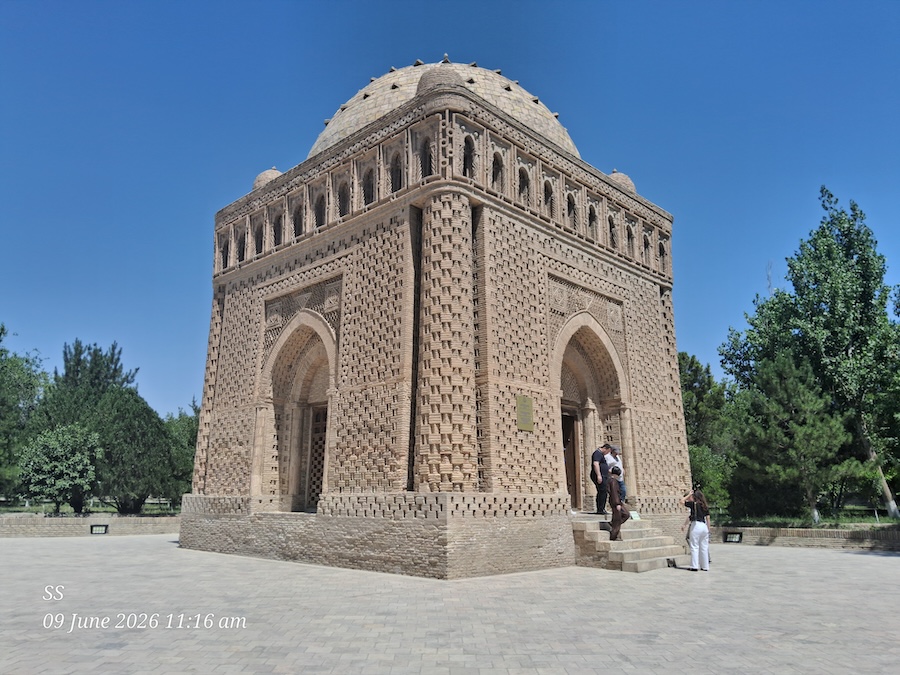
The Samanid Mausoleum (also known as the Ismail Samani Mausoleum), an architectural masterpiece located in Bukhara. This mausoleum dates back to the 10th century when the Samanid dynasty ruled Bukhara.
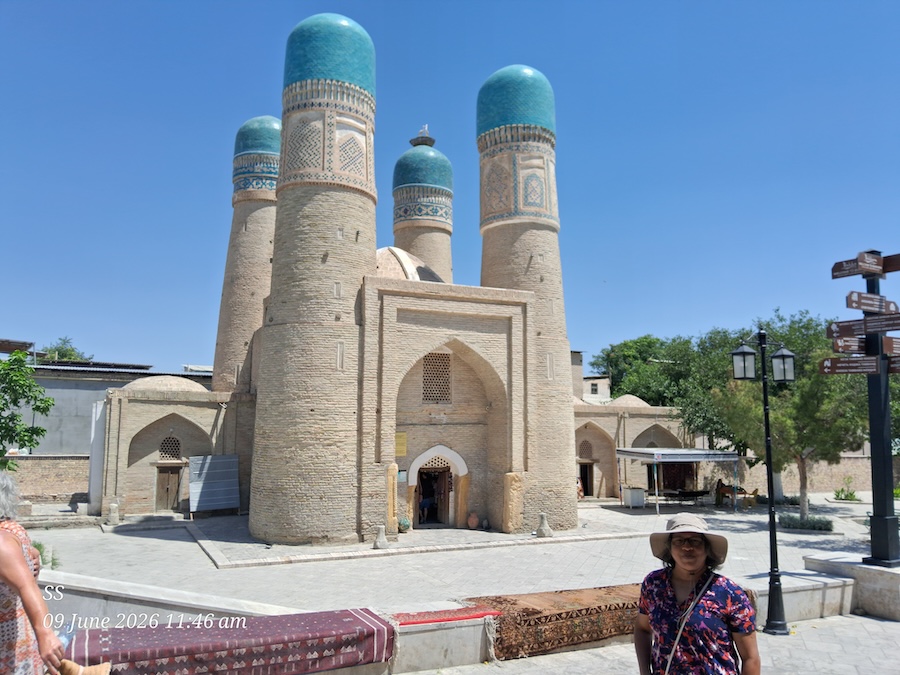
The Chor Minor,(Four Minarets) a famous 19th-century gatehouse located in the UNESCO-protected historic center of Bukhara. Each of the four towers features completely unique brickwork patterns and tile decorations. Local lore suggests that the distinct artistic motifs on each tower were designed to reflect the four major world religions: Islam, Christianity, Buddhism, and Hinduism. Elements on the towers can be seen resembling a Christian cross, a Christian fish symbol, and a Buddhist prayer wheel.
The Tosh Gate (also known as Tash-Darvaza or the South Gate), one of the four monumental entrances into the historic, walled inner fortress city of Itchan Kala in Khiva.
The Muhammad Aminkhan Madrasah, located in the UNESCO-protected Itchan Kala fortress in Khiva
The Muhammad Amin Khan Madrasah, built between 1852 and 1855, this was once the largest Islamic school (madrasah) in Central Asia. Today, the building has been uniquely repurposed into a boutique hotel called the Orient Star Khiva Hotel, allowing visitors to sleep in the historic rooms where scholars once stayed.
The Kalta Minor Minaret,the name Kalta Minor, which literally translates to "short minaret" in Uzbek, Located in Itchan Kala fortress.
The bustling street market located directly in front of the historic Olloqulixon Madrasa (also known as the Alla Kouli Khan Madrasa). This architectural masterpiece in Itchan Kala Fortress.
The historic Polvon Darvoza (also known as the Palvan Gate or East Gate), located in the ancient walled city of Ichan Kala in Khiva
Panoramic overview of the historic city of Khiva. The central skyline features traditional mud-brick buildings, domed structures, and prominent minarets typical of the ancient Silk Road trading post.
Ota Darvoza (the Father Gate) (The West Gate) which serves as the principal western entrance to the ancient walled city of Itchan Kala in Khiva
The magnificent Pahlavon Mahmud Complex or Pahlavon Mahmud mausoleum is a memorial monument,located in the inner city of Itchan Kala in Khiva.
The Juma Mosque (Friday Mosque), A Forest of Pillars, The ceiling rests upon 213 deeply carved wooden columns arranged in 17 parallel rows. A UNESCO World Heritage Site in Khiva,
The magnificent Olloqulixon Madrasa (also written as the Alla Kuli Khan Madrasah).
The courtyards of the Tosh hovli Palace (also known as the Tash Khauli Palace or "Stone Palace"). The iconic blue, white, and turquoise majolica tilework creates mesmerizing geometric patterns and arabesques that are globally recognized symbols of Islamic architecture along the Silk Road.
The beautifully decorated ceiling featuring traditional polychrome painted wooden beams located inside the historical Tosh Hovli Palace (Stone Palace) in Ichan Kala, the inner fortress of Khiva.
An apartment section belonging to the Harem quarters built for the khan's wives and concubines, inside the historic Tosh hovli Palace.
Outer Walls of Tosh Havli Palace, Ichon Qala, UNESCO World Heritage Site, Khiva
Visitors are dressed in matching traditional printed robes called chapans and wearing large, distinctive white sheepskin hats known locally as chugurma.
A beautiful historical scene from the ancient fortress city of Itchan Kala in Khiva
The vibrant souvenir market street inside the historic walled inner city of Itchan Kala, located in Khiva.
The illuminated Islam Khoja Minaret and Madrasah, an architectural masterpiece located in the heart of the ancient walled city of Itchan Kala in Khiva. |